
I Was Born After 9/11. But I Grew Up in Its Shadow
I was born in 2005, four years after September 11, 2001.
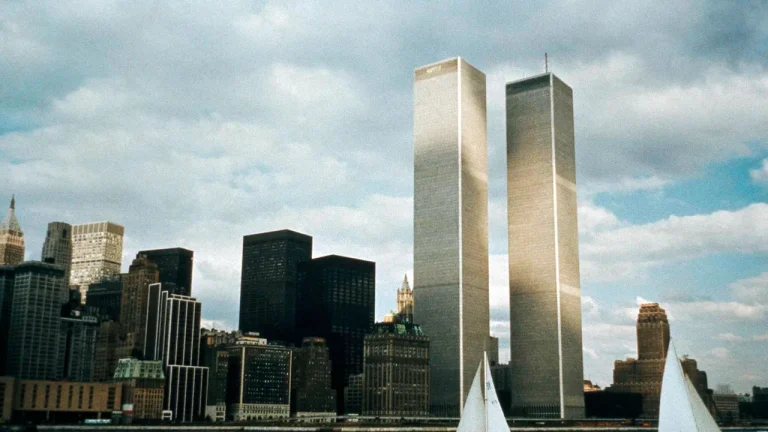
That means I cannot honestly say that I remember where I was when the attacks happened. I do not remember watching the Twin Towers fall or hearing the news for the first time. I was not alive when that morning changed the course of international politics.
But I grew up in the world that 9/11 created.
For my generation in Pakistan, September 11 was never simply a date in a history book. We grew up in a country deeply affected by the security environment that followed the attacks. Words such as terrorism, extremism, militancy, counterterrorism, security and the War on Terror became part of the world we inherited.
As a child, I did not understand what these words meant. As I grew older, I began to understand that 9/11 was not only an American tragedy. Its consequences reached far beyond the United States and reshaped international relations, security policies and societies across the world.
Pakistan was particularly affected by the post-9/11 security environment. Terrorism and militancy became major national concerns, while military operations, law-enforcement measures and counterterrorism policies became part of the country’s political and security landscape.
Growing up in Balochistan, I also came to understand that security is not an abstract concept. It affects ordinary people, communities and their sense of safety and belonging.
My understanding of terrorism changed further when I began studying International Relations.
I initially thought of terrorism mainly as a security problem that governments and security forces had to defeat. But studying counterterrorism made me realize that preventing terrorism involves much more than stopping an attack.
It involves intelligence, policing, financial investigations and international cooperation. But it also involves governance, education, community trust, the rule of law and the ability of institutions to respond to grievances without allowing violence to become the answer.
The world did get some things right after 9/11.
International cooperation against terrorism expanded. Governments strengthened intelligence-sharing and developed mechanisms to disrupt terrorist financing. The United Nations also developed a more comprehensive approach. Its “Global Counter-Terrorism Strategy” (https://www.un.org/counterterrorism/en/united-nations-global-counter-terrorism-strategy-living-framework-global-action), adopted in 2006, is built around four pillars: addressing conditions conducive to terrorism, preventing and combating terrorism, strengthening state capacity, and protecting human rights and the rule of law. In 2026, the United Nations is conducting the ninth review of the strategy, marking 20 years since its adoption.
These lessons remain important 25 years later.
But I also think the world needs to be honest about what went wrong.
The response to terrorism sometimes became too heavily defined by military force and security measures. Military and intelligence operations can disrupt terrorist organizations and prevent attacks. They are necessary tools. But they cannot, by themselves, create lasting peace.
A terrorist organization can be weakened, but if communities remain vulnerable to recruitment, propaganda, exclusion or institutional failure, another threat can emerge.
There is another lesson that I believe my generation must not forget: the fight against terrorism should not become a fight against communities.
Terrorism should never be associated with an entire religion, ethnicity, nationality or population. When fear becomes the basis of policy, innocent people can become targets of suspicion simply because of who they are. That can deepen division and weaken the trust that effective security actually requires.
Counterterrorism should therefore protect both security and dignity.
This does not mean being soft on terrorism. It means being smarter about how terrorism is prevented.
Today, the threat itself is changing. Violent extremist actors can use digital platforms for propaganda, recruitment and communication. Individuals can become radicalized without being part of a traditional organization. This makes prevention more complicated and requires security institutions to adapt without abandoning legal safeguards and civil liberties.
The international response also needs to recognize that counterterrorism is not only a security issue. The United Nations itself emphasizes that effective counterterrorism requires international cooperation while prevention efforts must also look beyond strict security concerns toward broader social and developmental conditions.
Twenty-five years after 9/11, the question should therefore not simply be whether terrorism has been defeated.
It should be whether our societies have become better at preventing violence while preserving the values they claim to protect.
For me, the answer is still unfinished.
We need strong intelligence and effective law enforcement. We need international cooperation against terrorist financing and cross-border networks. But we also need institutions that communities trust, opportunities that reduce vulnerability, education that builds resilience, and justice systems that operate fairly.
The United Nations’ counterterrorism https://www.un.org/en/global-issues/countering-terrorism framework reflects this broader understanding by placing human rights and the rule of law alongside prevention and security. Its four-pillar framework deliberately connects counterterrorism with addressing conditions conducive to terrorism, strengthening state capacity, and protecting rights.
I was not alive on September 11, 2001.
I cannot remember the fear of that morning because it was not my morning.
What I can remember is growing up in its aftermath. I grew up hearing about terrorism and security before I was old enough to understand them. Later, I chose to study International Relations and became interested in counterterrorism because I wanted to understand how a single event could reshape the world in which my generation was raised.
Perhaps that is what 9/11 means to someone born after it.
It is not a personal memory of the planes, the towers or the smoke.
It is a memory inherited through the world around us.
Twenty-five years later, remembrance should not only mean looking backward. It should also mean asking what kind of world we want to build from the lessons of that day.
My generation did not choose the world created after 9/11.
But we will help decide what comes next.
And if there is one lesson I would carry forward, it is this:
The fight against terrorism must never allow fear to become stronger than the values we are trying to protect.