

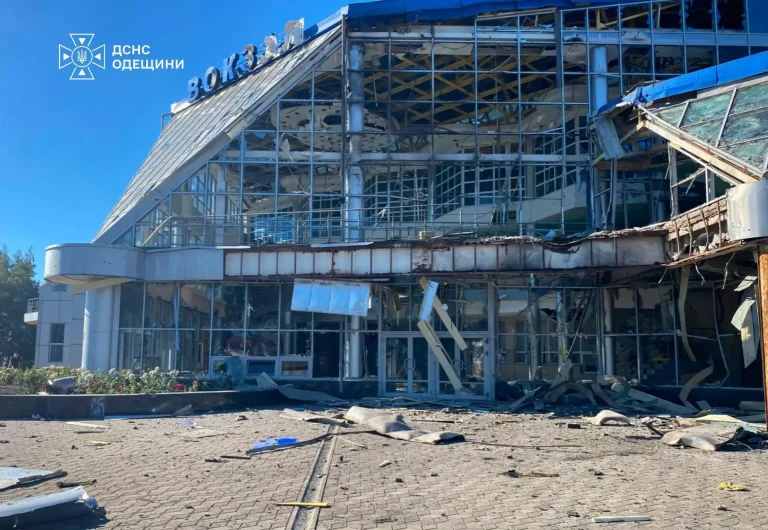
File photo courtesy of State Emergency Service of Ukraine via Wikimedia Commons · CC BY 4.0. Photo source and license.
September 10, 2026 — The world produced plenty of security headlines overnight, but Taiwan carried the clearest strategic weight. Taiwan nuclear drill simulates drone attack, drawing on Ukraine war lessons digitimes. At the same time, Russia, The Ukraine War, and Jordan remained major parts of the global picture.
Rise to Peace reviewed 845 distinct incidents across 41 countries, consolidated from at least 1246 attached source reports. The point is not to turn the database into a scoreboard. It is to separate repeated coverage from events that can change military decisions, civilian risk, diplomacy or regional stability. Distinct incident volume was up 5.0% from the preceding 24-hour window, but volume alone does not determine strategic importance.
What changed overnight
Missile, drone or air-strike activity put Taiwan in focus
Taiwan nuclear drill simulates drone attack, drawing on Ukraine war lessons digitimes. Rise to Peace places the event in Taiwan and classifies it as air, drone, missile or rocket strike. At publication, the record is reported with 1 attached source report.
Long-range strikes matter because they compress warning time and expand the geographic space in which a conflict can impose costs, even without a major ground offensive.
Military activity intensified in Russia
Russia’s next Baltic move may not be invasion. Rise to Peace places the event in Russia and classifies it as war or military operation. At publication, the record is reported with 1 attached source report.
The strategic importance goes beyond the immediate attack: pressure on major shipping routes can quickly spill into energy prices, insurance costs, military deployments and commercial transit decisions.
Long-range strikes kept reshaping the Russia-Ukraine battlefield
Fires reported in Russia's Dagestan amid Ukrainian drone attack The Kyiv Independent. Rise to Peace places the event in Kyiv, Ukraine and classifies it as air, drone, missile or rocket strike. At publication, the record is reported with 1 attached source report.
The strategic importance goes beyond the immediate attack: pressure on major shipping routes can quickly spill into energy prices, insurance costs, military deployments and commercial transit decisions.
Missile, drone or air-strike activity put Jordan in focus
Iran Damages A-10, F-15s with Missile Attack on Air Base in Jordan Air & Space Forces Magazine. Rise to Peace places the event in Jordan and classifies it as air, drone, missile or rocket strike. At publication, the record is reported with 1 attached source report.
Because the event touches military or diplomatic infrastructure, the key question is whether it produces a direct retaliatory cycle or tighter force-protection measures.
Missile, drone or air-strike activity put Germany in focus
Rutte reaffirms NATO solidarity with Germany after Russian drone attack euractiv.com. Rise to Peace places the event in Germany and classifies it as air, drone, missile or rocket strike. At publication, the record is reported with 1 attached source report.
Long-range strikes matter because they compress warning time and expand the geographic space in which a conflict can impose costs, even without a major ground offensive.
What the data says
Across the full monitoring window, the leading event categories were shooting (306), explosion or bombing (199), and war or military operation (81). The countries with the most distinct qualifying records were United States (270), Unknown (140), Bangladesh (75), Brazil (64), and Turkey (46). Those totals describe reporting captured by the Rise to Peace monitor; they do not mean the country with the most records is automatically the most dangerous.
Verification matters just as much as volume. The current record includes 0 confirmed or verified, 165 corroborated, and 680 reported or single-source incidents. In fast-moving wars, casualty figures, attribution and even locations can change, so the brief treats developing claims as developing claims.
Why this matters
Taken together, the strongest incidents point to concentrated pressure rather than a uniform rise in danger everywhere. Taiwan, Russia, and The Ukraine War were the main systems shaping the morning picture. A notable common thread was reach: missiles, drones, air operations or direct military exchanges allowed actors to impose costs well beyond a single front line. That is why raw article volume is a poor proxy for importance. A heavily covered local event can produce dozens of headlines, while one cross-border strike or attack on strategic infrastructure can carry much larger consequences.
Compared with the preceding 24 hours, the number of distinct monitored incidents was higher by about 5.0%. High-impact events moved from 133 to 104. That suggests some easing in the number of strategically severe events, although individual flashpoints can still deteriorate quickly.
What to watch next
- Watch the next Russia-Ukraine long-range strike cycle, especially attacks on infrastructure, air-defense activity and evidence of expanding target sets.
- Watch for additional Iranian or U.S.-linked strikes, changes to military force protection, and any disruption around Gulf airspace or the Strait of Hormuz.
Explore the data behind this brief
The incident record keeps updating after this article is published. Readers can inspect the source-linked events, locations and verification status on the Rise to Peace Live Global Security Monitor.
Methodology
This brief is built from the canonical Rise to Peace Live Monitor dataset. Likely same-event records are merged again before writing, then incidents are ranked by severity, strategic significance, escalation, recency and corroboration. The analysis explains the monitored record and does not assign a predictive risk score. Source links are retained so readers can check the underlying reporting.