
Generation after 9/11: The story of Muslim Arab girl
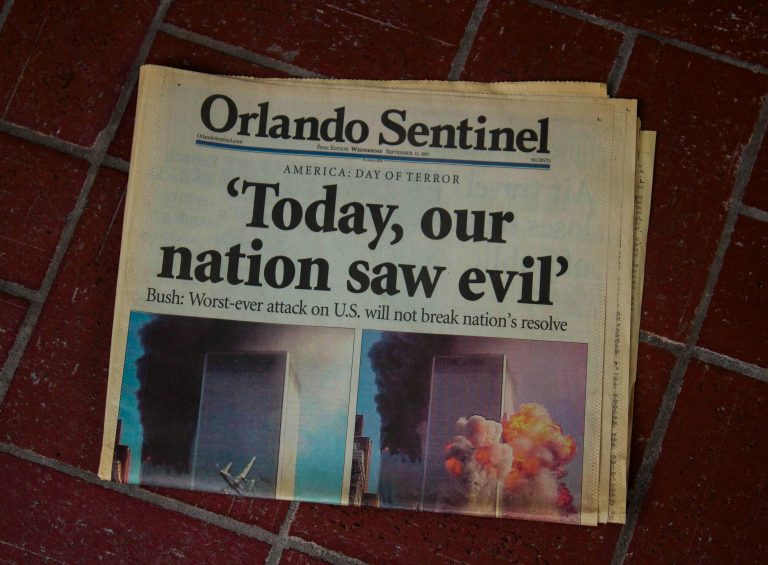
I was born just two months before 9/11. At the time, I was too young to know that an attack thousands of miles away, on another continent, would shape the way the world would see people like me and, eventually, the way I would understand my own identity.
Years later, I studied political science for my bachelor’s degree. During my master’s, I decided to specialize in terrorism studies. In many ways, my academic path was shaped by the same event that had taken place before I was old enough to understand it.
But I did not grow up thinking of Islam through the lens of terrorism.
I was raised to believe that my religion is a religion of peace. I grew up in a country where Muslims and Christians lived side by side. We celebrated each other’s religious occasions, shared meals, laughed together, and lived our everyday lives without religion being a source of division. Faith was part of our lives, but it was not a reason to hate one another.
As I grew older, I learned a few European languages and interacted with people from different countries and cultures. Those experiences taught me something important: the way many people outside Muslim communities understood Islam was often very different from the Islam I knew and the reality I had lived.
I encountered people who genuinely believed that my religion commanded mass killing, that Muslims were taught to hate non-Muslims, or that a woman wearing the hijab must be oppressed and incapable of making her own choices. None of those assumptions reflected my life. And that gap between perception and reality became impossible for me to ignore.
I began to wonder: What happens when more than a billion people are reduced to the actions of a tiny minority? What happens when images of terrorism become the primary lens through which an entire religion is understood? What happens when the stories of ordinary Muslims are rarely given the same attention?
This is the message I have wanted to share with the world: More than a billion Muslims cannot be reduced to the stereotypes that became widespread after 9/11.
Muslim societies are not monolithic. Muslim experiences are not identical. And the lived reality of Muslims in Muslim-majority countries is often far more ordinary, diverse, and complicated than the narratives presented about them.
The same is true of Muslims who immigrate to Western countries. Many leave their homes because they want what people everywhere want: safety, opportunity, dignity, education, and a decent human life. To assume that Muslim immigrants are secretly arriving with the intention of destroying the societies they move to is not only deeply unfair; it erases the very human reasons people migrate in the first place.
And then there is the hijab. For me, wearing it is a choice. It is an expression of my faith and identity. It is NOT evidence that I am incapable of making decisions for myself. Yet Muslim women are often spoken about as though they cannot speak for themselves.
I do not expect one person’s story to undo decades of stereotypes. Nor do I believe that every misunderstanding about Islam can be solved through a single conversation. But I do believe that stories matter.
I was born into a world that had already begun changing because of 9/11. I grew up watching the consequences of that change affect people who looked like me and believed as I did. I then chose to study the very subject that had become so deeply associated with my religion in the public imagination.
Perhaps that is why I feel a responsibility to keep talking. Not to claim that Muslims are perfect. Not to deny the existence of terrorism or violence committed in the name of Islam. And not to replace one stereotype with another. But to insist on something much simpler: Muslims are human beings before they are headlines.
We are more complicated than the images used to represent us. More diverse than the stereotypes assigned to us. And our lives cannot be understood solely through the actions of those who claim to speak in the name of our faith. I still have a long way to go. But every day, I am trying to close the distance between perception and reality through one conversation, one experience, and one story at a time.
https://www.archives.gov/news/topics/9-11-anniversary