

Picture a market before dawn, stalls being set up in the dark, traders who will spend the whole day disagreeing over prices with people they will greet by name tomorrow. That daily argument is not a failure of peace. It is one of peace’s actual, unglamorous shapes: people who disagree, and choose to keep showing up to the same stall anyway.
We have been given too narrow a picture of what peace looks like, flags lowered, doves released into camera flashes, two leaders shaking hands for an audience who will never meet either of them. Real peace rarely photographs well. It looks like two compounds sharing a wall, repairing it together after the rains without anyone keeping score of whose crack it was. It looks like an elder called to settle a quarrel before it hardens into a grudge passed down to children who never knew how it started. It looks like a sentence someone chose not to say.
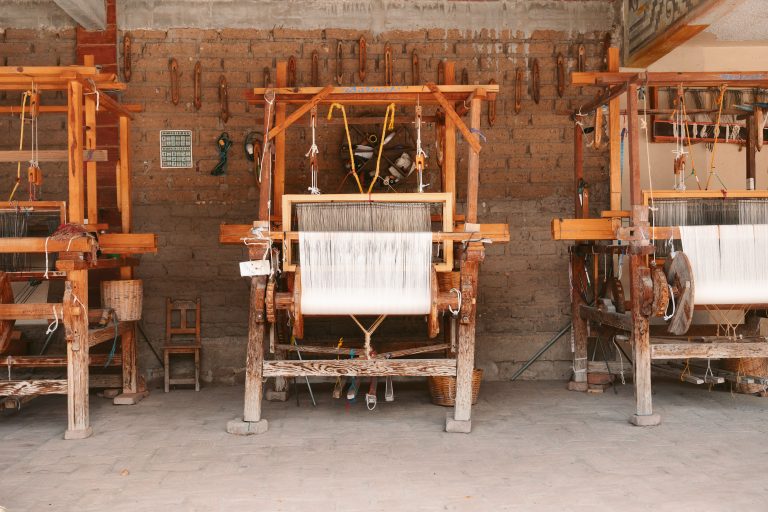
There is a kind of cloth, woven from threads that started out as separate colors, spun by different hands, on different days, that only becomes something whole once someone sits down and works them together, one pass of the shuttle at a time. Peace is closer to that loom than to any ceasefire. It does not arrive as a single finished thing. It is worked, thread over thread, by people willing to sit long enough at the loom to see a pattern no single thread could have made alone.
A child does not learn this from a treaty. A child learns it from watching, from sitting at the edge of the compound and noticing that the two men who argued last week are the ones now lifting a fallen roof beam together, that the woman whose goat wandered into a neighbor’s yard is the same woman stirring the pot at that neighbor’s daughter’s naming ceremony three months later. Long before a person can define peace, they have already watched it being practiced, or not, by the adults around them. This is why peace is generational in a way war rarely has to be. War can be started by one impatient decision. Peace has to be demonstrated, repeatedly, in view of the next generation, or it is not actually being taught at all.
It is worth admitting that the loom does not always cooperate. There are seasons, drought, scarcity, an election that splits a town along old lines, a border dispute that reopens a wound nobody had finished healing, when the threads resist and the pattern refuses to hold. This is not proof that peace has failed. It is proof that peace was never supposed to be permanent in the way a monument is permanent. It is closer to a garden that must be tended through every season, including the ones that make tending feel pointless. The weaver who abandons the loom during a difficult stretch of thread never sees what the finished cloth would have looked like. The same is true of the community that gives up on itself the moment peace becomes inconvenient.
This is worth remembering on a day the world sets aside for peace, because a single day of remembering changes very little if the loom sits untouched the other three hundred and sixty-four. The wall that needs repairing, the quarrel that needs an elder, the sentence better left unsaid, these are not smaller than the treaties and ceasefires the news covers. They are simply the version of peace most of us are actually handed to build.
And so, rather than close with more prose, I leave you with an ode:
Not the dove let loose in air,
not the flag brought low and still, but the trader’s stall, the ordinary care of hands that argue, yet rebuild.
Peace is not one thread alone, spun smooth and finished, whole, and true, it is the shuttle, pass by pass, thrown between a hand like mine, and one like you.
It is the wall two compounds mend without a ledger kept of blame, the elder called to help a quarrel end before it hardens into a name.
A child who watches learns the trade before a single word is taught, sees peace not spoken, but displayed in every mended thing, unbought.
So I leave you, not with dove or flame,
but with a loom still standing bare, for peace is cloth without a claimed first thread, a pattern always shared.