Rise to Peace

Home / Gada Bibi Fellowship

Rise to Peace Leadership Program

Gada Bibi Fellowship

The Gada Fellowship is the structured professional-development pathway of the Rise to Peace Leadership Program. It brings together participants from different countries and professional and academic backgrounds to develop practical skills, deepen their understanding of international and community-level issues, and gain substantive professional experience through work with Rise to Peace.

3, 6 or 12 months5–15 hours/weekRemote · InternationalIndividual Fellowship PlanUnpaid professional experienceInternational Leadership & Professional Development

Fellows participate for a defined term under an individualized Fellowship Plan. Based on their background, interests, skills, languages, availability and development goals, each Fellow is assigned a designation and one or more areas of work.

About Rise to Peace

The way of the word over the way of the gun

Rise to Peace is a U.S. nonprofit advancing peace through research, dialogue, education and practical work. We believe in the way of the word over the way of the gun.

Fellows at work

Fellows have taken part in research and writing, conference planning and organization, media and communications, partnerships, community projects and more. Scroll through each area below.

Where it began

Rise to Peace started in 2016 with student volunteers doing research and outreach: interviews on cross-cultural understanding at George Mason University, a volunteer team in Turkey, and the Say Hello Project, which brought neighbors in Northern Virginia into conversation.

Team Rise to Peace recording interviews for cross-cultural research, George Mason University, November 2016
Rise to Peace volunteer team in Turkey, 2016
Fellows in conversation with residents during community outreach, Fairfax, Virginia, July 2017
Say Hello Project volunteers, 2017
Fellows and team members at a cohort gathering, September 2018

Conferences & public dialogue

Fellows research, plan and coordinate conferences, panels and public discussions with policymakers, scholars and practitioners, and represent Rise to Peace at events such as the World Bank Spring Meetings and the World Summit on Counter-Terrorism in Herzliya, Israel (2019).

Rise to Peace Fellows at the U.S. Institute of Peace, Washington, D.C., 2018
Fellows and speakers at the Global War on Terrorism seminar, George Washington University, 2017
Workshop on the role of civil society in countering violent extremism, Counter Terrorism Center, John Jay College of Criminal Justice, 2019
How to Counter Violent Extremism symposium, 2018
Peace dialogue in Kabul, 2018
Elections & Extremism symposium, American University of Afghanistan, 2019

Policy meetings & international forums

Fellows take part in meetings with government officials, international delegations and multilateral institutions, from United Nations meetings in New York to roundtables at the U.S. Institute of Peace and advocacy on Capitol Hill.

Rise to Peace Fellows in New York for United Nations meetings, 2018
Roundtable on the intelligence dimensions of the Afghanistan war with Afghan officials and former Deputy Chief of Mission David Sedney, U.S. Institute of Peace, July 2018
Meeting with a State Department International Visitor Leadership Program delegation from Indonesia on preventing youth extremism, November 2018
With Lutheran Immigration and Refugee Services meeting members of Congress in support of Afghan Special Immigrant Visas, World Refugee Day, June 2019

Field research & reporting

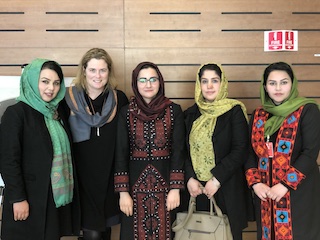
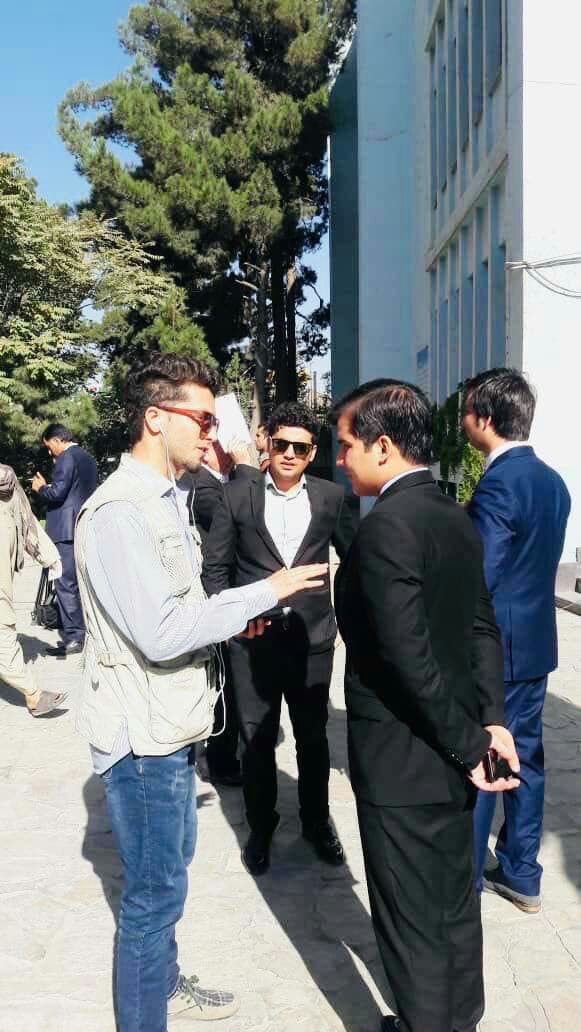
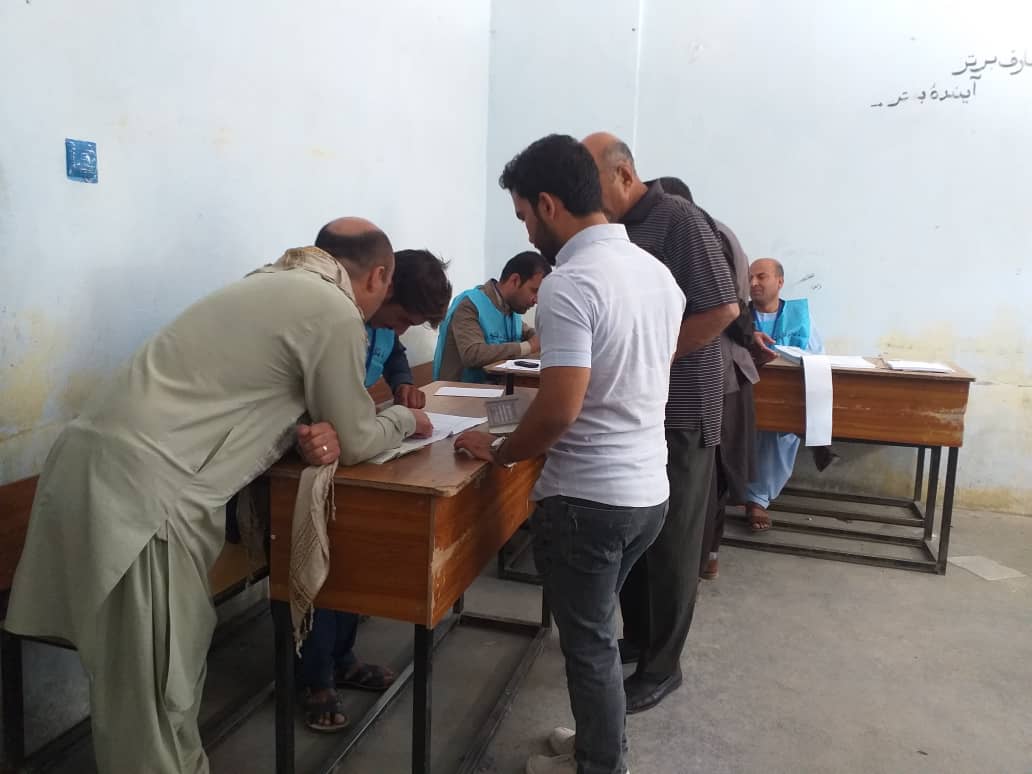
A team of Afghan women researchers led a long-term study across 24 provinces on the lack of access to basic information, and presented their findings at the U.S. Embassy to 17 Foreign Service officers and civil servants, including Holly Holzer. Fellows have also reported from the field, including election-day reporting and voter interviews in Kabul in 2019 and coverage of the Doha peace talks.

Rise to Peace's Afghan women research team with Holly Holzer of the U.S. Embassy, after briefing their 24-province study on access to information
A Rise to Peace researcher at work in Kabul, January 2020
Sayed Mujib Faizy of Rise to Peace interviewing voters in Kabul, September 28, 2019
Residents of District 15 of Kabul voting. Photo by Rise to Peace, 2019
Intra-Afghan peace conference, Doha, 2019

Humanitarian & evacuation work

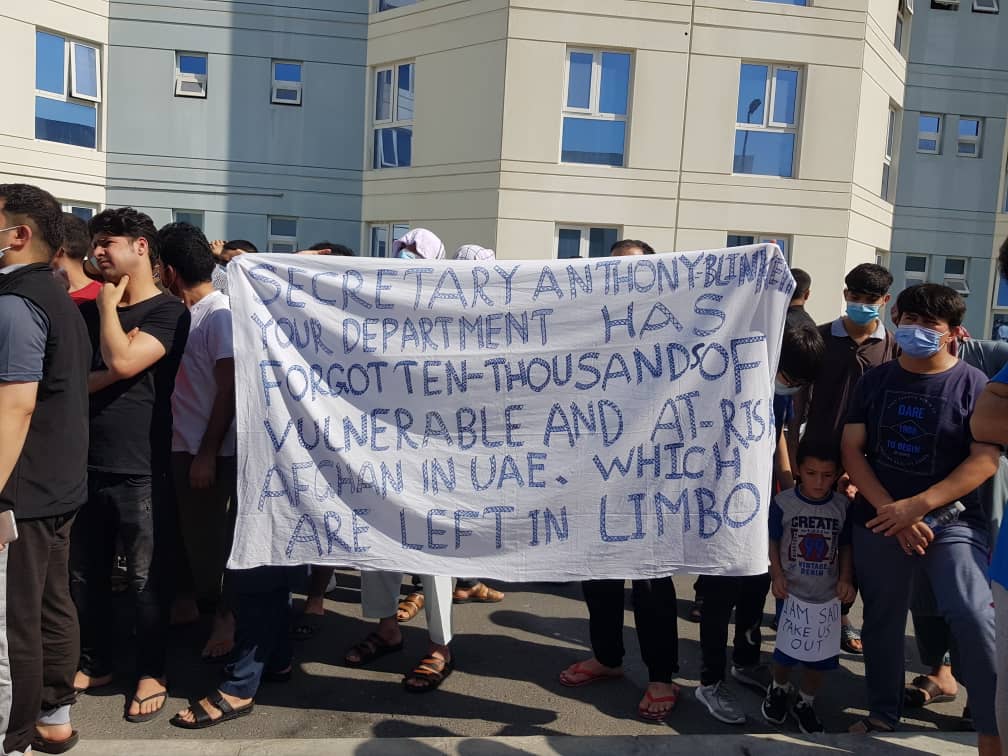
During the 2021 Afghanistan withdrawal, Fellows and the Rise to Peace team collected, reviewed and analyzed information on at-risk U.S. citizens, permanent residents and Afghan allies, including SIV and P-2 applicants, and passed it to U.S. government contacts. The network documented conditions at Kabul airport, with material carried by CNN, NBC and Reuters, and Rise to Peace photographs and reporting on Afghan evacuees stranded in the UAE were carried by Reuters and Associated Press coverage in 2022.

Kabul airport during the evacuation, August 2021
Afghan evacuees in the UAE, 2021
Purpose

Learning through substantive work

The Fellowship combines professional development with practical experience. Fellows are expected not only to study issues, but also to research, write, communicate, develop ideas, work with others and contribute to active organizational priorities.

Fellows may conduct research, contribute to publications, take part in interviews and conferences, develop community projects, support institutional engagement, work on grants and partnerships, contribute to technology and communications, and undertake other approved Rise to Peace assignments.

01

The Fellowship is designed to

  • develop leadership and professional capabilities;
  • strengthen research, analytical, communication and project skills;
  • provide practical experience in a U.S. nonprofit with international work;
  • involve Fellows in substantive international-affairs and community-level work;
  • develop professional judgment, reliability, initiative and collaboration;
  • build the ability to work independently in a fully remote setting with a diverse international team;
  • develop practical technical skills, including applied artificial intelligence and Rise to Peace’s research and technology systems;
  • connect Fellows with professionals and peers from different countries and disciplines;
  • enable Fellows to build a documented body of work they can accurately reference.
Fellowship structure

How the Fellowship is organized

Term
3, 6 or 12 months, agreed with Rise to Peace. Extensions can be discussed toward the end of a term; they are not automatic.
Format
Fully remote and international.
Participation
Structured, with agreed responsibilities, deadlines and milestones.
Weekly commitment
Normally 5 to 15 hours a week, set in the Fellowship Plan. More only by agreement.
Designation
All admitted participants are members of the Gada Bibi Fellowship Program and are referred to collectively as Gada Fellows. Every Gada Fellow holds the professional designation of Research Fellow, whether they are an undergraduate, graduate or postgraduate student, or an experienced professional.
Supervision
Each Fellow’s supervisor is confirmed in their acceptance letter and Fellowship Plan. Project leads coordinate day-to-day work.
Fellowship Plan
Individualized after acceptance and kept in My Workspace with deadlines, feedback and documented work.
Review
Periodic progress and development review, with an end-of-term evaluation where appropriate.
Compensation
Unpaid. The Gada Fellowship is not paid employment. It is a structured professional experience with a U.S. nonprofit working internationally, with defined responsibilities, supervision and documented work, and Fellows may list it under professional experience. Academic credit can be arranged by agreement between Rise to Peace and the Fellow’s university.
Mentorship
Fellows have access to mentorship from Rise to Peace leadership on career direction, professional challenges and development goals.

Under the standard Fellowship Plan, Fellows normally submit an evidence-based research piece or article every two weeks, produce one reviewed educational video a month (appearing on camera is not required), develop one community project proposal during the term, make one qualified institutional introduction through approved outreach, and take on assigned organizational work within their agreed hours. An individual Fellowship Plan may vary these.

What Fellows do

Professional experience through the Fellowship

Gada Fellows gain experience through five broad areas of Fellowship activity. Fellows are not expected to do everything at once. The Fellowship Plan identifies the responsibilities, assignments and milestones most relevant to each Fellow's background, development goals and term, and to current Rise to Peace priorities.

01

Research, Analysis & Writing

Fellows may conduct original research; analyze international, regional, national or community-level developments; prepare articles, research briefs and background papers; carry out literature reviews and source research; verify information and reporting; prepare policy or issue analysis; contribute evidence-based commentary; assist with longer research projects; prepare research for interviews; and submit work for editorial review and possible publication.

Submission does not guarantee publication. All published work is subject to Rise to Peace editorial standards and review.

02

Interviews, Conferences & Public Communication

Fellows may research potential interview subjects, prepare questions, and conduct or support approved interviews with scholars, officials, journalists, practitioners, civil-society representatives, community leaders and subject-matter experts. They may attend conferences or dialogues relevant to their work, assist with conference research, prepare speaker or participant briefs, contribute to event preparation, produce educational videos and presentations, contribute to moderated discussions, and assist with post-event research or publications.

External-facing work follows Rise to Peace approval and communications procedures.

03

Community Project Development

Fellows may identify a community, issue or practical challenge and develop a project proposal addressing it. The community may be one they belong to, know well, have studied, or have a legitimate professional interest in.

The work typically involves defining the problem, researching the local context, identifying stakeholders, assessing needs, setting objectives, proposing activities, identifying potential partners, considering implementation requirements, outlining an initial budget or resource concept where appropriate, considering sustainability, and submitting the proposal to Rise to Peace for review.

Strong proposals may be considered for further development, partnership outreach, fundraising, grant applications or implementation when resources and organizational capacity allow. Submitting a proposal does not guarantee funding or implementation.

04

Institutional Engagement & Partnerships

This area shows Fellows how professional and institutional relationships are developed. With Rise to Peace authorization, Fellows may research universities, think tanks, nonprofits, foundations, international organizations, government institutions, private-sector and media organizations, research institutes and other prospective partners.

They may also conduct stakeholder mapping, prepare institutional background research, assist with outreach, draft professional correspondence, support meeting preparation, help coordinate introductions, research partnership possibilities and support approved institutional engagement.

Fellows do not independently represent, commit or legally bind Rise to Peace. External institutional engagement is undertaken only with appropriate authorization.

05

Organizational Assignments & Professional Practice

Fellows may be assigned to current organizational priorities according to their skills and development goals. Examples include:

Research and publicationsResearch projects, articles, reports, fact-checking, source verification, editing support, regional and policy research.

Grants and institutional developmentGrant prospect and foundation research, concept notes, proposal support, grant tracking and supporting materials.

Partnerships and external relationsPartner research, institutional outreach, professional correspondence, stakeholder mapping, university engagement.

Media and communicationsMedia monitoring and analysis, communications research, public education, briefing materials, interview preparation, digital content.

Technology and AIResearch workflows, responsible use of AI, automation, information management, digital tools and databases.

Data, OSINT and monitoringOpen-source research, source verification, datasets, dashboards, incident monitoring, trend and geopolitical analysis.

Programs and operationsProject coordination, education programs, events and conferences, administrative systems, program research, supporting global teams.

Organizational assignments give Fellows experience beyond a single academic discipline and show how research, programs, communications, partnerships, development, technology and operations work together within a U.S. nonprofit that works internationally.

Subject areas

Issues Fellows may work on

The type of work a Fellow does and the subject it concerns are separate. Topics follow world events and active Rise to Peace work. Current and recent areas include the following; the list is not exhaustive.

Peace & security

  • Peacebuilding and conflict prevention
  • Terrorism and violent extremism
  • National and international security
  • Conflict and political violence
  • Mediation and reconciliation
  • Arms control and nonproliferation

Global affairs

  • International affairs and diplomacy
  • Foreign policy
  • Geopolitics and geopolitical risk
  • Economic security and sanctions
  • International law and institutions

Governance & society

  • Governance and the rule of law
  • Human rights
  • Migration, refugees and displacement
  • Humanitarian response
  • International development
  • Climate and environmental security

People & communities

  • Youth and education
  • Women, peace and security
  • Community resilience and local development
  • Interfaith and intercultural dialogue

Technology & information

  • Disinformation and information integrity
  • Artificial intelligence and emerging technology
  • Cyber and digital security
  • Open-source research and data

Regions

  • South and Central Asia, including Afghanistan
  • The Middle East and the Gulf
  • Europe and Eurasia
  • Africa
  • East Asia and the Pacific
  • The Americas

Fellows may also work on other regional and global issues relevant to Rise to Peace’s mission.

Your Fellowship Plan

Structure that can evolve

Following acceptance and onboarding, each Fellow receives a Fellowship Plan setting out the designation, term, primary work portfolio, areas of substantive focus, expected participation, initial assignments, development objectives and agreed milestones.

The Plan provides structure while allowing assignments to evolve as a Fellow develops new capabilities, shows initiative or becomes involved in additional work.

Professional record

Building a record of experience

Fellows build a record of the substantive work they complete. Depending on assignments, this may include research and publications, analytical products, interviews, project proposals, conference work, institutional engagement, grants and partnership research, communications products, data and technology work.

Rise to Peace may verify a Fellow's approved designation, Fellowship dates, responsibilities, completed projects, approved publications and other documented work for professional purposes. This is Fellowship verification, not employment verification.

Fellows who complete their term successfully receive formal recognition of completion, and outstanding work and leadership may be nominated for the Gada Bibi Award. At Rise to Peace’s discretion, Fellows may also be offered references, letters of support, recommendations for paid roles, or nominations to external forums such as World Bank Group meetings.

Progress, feedback & review

Periodic review

Review supports development, provides feedback, assesses progress and keeps assignments appropriate to the Fellow's goals and the needs of the program. It may consider quality of work, reliability, timeliness, initiative, collaboration, professional conduct, skill development, participation and progress against the Plan.

Outcomes may include updated assignments, additional responsibilities, further mentorship, an adjusted portfolio, extension where appropriate, completion, or a move to BOTA where flexible participation becomes more suitable.

Eligibility

Who the Fellowship is for

Undergraduates, graduate and postgraduate students, and early-career professionals, wherever they live, who can give regular time for an agreed term. Applicants must be at least 18 years old and able to give at least 5 hours a week.

The application asks for your current or most recent university or school, your highest completed education and a current résumé. Every applicant answers six confidential safeguarding questions; a Yes answer is not an automatic rejection.

Selection

How selection works

  1. Applications are reviewed individually, based on background, interests, experience, development goals, availability and fit with current Rise to Peace work.
  2. A formal interview is not required in every case. Rise to Peace may contact an applicant when more information or a conversation would help.
  3. Selected applicants receive a Fellowship offer and have three days to respond: accept the Gada Fellowship, choose the BOTA Fellowship instead, or decline.
  4. Participation begins only after the applicant accepts. Onboarding then opens the workspace and the Fellowship Plan.

A streamlined process does not mean automatic acceptance.

Your professional profile

01

Public visibility is optional

Public visibility does not affect selection. Applicants indicate whether, if selected and after accepting an offer, they would like an approved professional profile to appear on the Rise to Peace website.

Consent for a public website profile and consent for social-media features are separate choices, and neither is assumed. Nothing about an applicant is made public because they apply or because Rise to Peace makes an offer. Fellows can review or change these choices later in My Workspace.

Rise to Peace Leadership Program

Two different ways to participate

The two Fellowships serve different purposes. Neither is a step toward or away from the other, and applicants choose the one that suits their goals and availability.

01

Gada Fellowship

Leadership & professional development

For people seeking:

  • a structured Fellowship with a defined term;
  • regular participation and mentorship;
  • an individualized Fellowship Plan;
  • assigned substantive work;
  • leadership and professional development with periodic review;
  • a documented portfolio of professional experience.
02

BOTA Fellowship

International affairs research & knowledge sharing

For people seeking:

  • flexible participation;
  • an international research and professional network;
  • the chance to research, write and submit work for publication;
  • interviews and expert discussion;
  • knowledge exchange across countries and disciplines;
  • the ability to contribute according to their availability.
About the BOTA Fellowship

Apply for the Gada Fellowship

The application is a single page. You will be asked about your background, the areas of work that interest you, your development goals and the time you can realistically commit.

Why this name

Gada Bibi was the maternal grandmother of Rise to Peace founder Ahmad Shah Mohibi. In his memoir, WarGuy, he recalls her warning her son Zahir not to trust a so-called peace meeting. Her sons were killed in the conflict, one after another. Shah writes that she raised them and then

lived long enough to watch war take them from her.

The Fellowship is named in her memory.