 Rise to Peace

Counterterrorism is one of the most sensitive and challenging areas of international security, particularly with regard to the legitimacy of interventions in civilians’ private lives. By its very nature, counterterrorism operates at the intersection of the protection of privacy and human rights and the need to implement effective measures to prevent acts of terrorism, raising significant ethical concerns (Nesiah, 2013; Alimahomed-Wilson & Zahzah, 2023).
The design of counterterrorism operations must take into account the protection of public spaces, the prevention of abuses of power that may jeopardise citizens’ enjoyment of social and economic rights and their right to privacy, and the prevention of further discrimination based on gender, social class, ideology or religious affiliation. These objectives should be pursued through a humanitarian approach grounded in the principles of “Do No Harm” and non-discrimination (Nesiah, 2013). Counterterrorism operations and policies inherently carry the risk of reproducing the very power structures and forms of oppression that may contribute to the emergence and perpetuation of terrorist phenomena. Such practices may fuel grievances and undermine trust between security personnel and the civilian population in the countries concerned (Nesiah, 2013; Razavi, 2021).
An important consideration, therefore, is the need to secure the trust and legitimacy of the civilian population, particularly when the nature of counterterrorism interventions requires operating within individuals’ private lives and spaces (Stromseth et al., 2006). This issue also affects peacekeeping and peace enforcement operations involving the deployment of military forces. Both academic literature and practical experience highlight the complexity of these operations, partly because they must be perceived as legitimate by civilian populations and implemented in accordance with applicable legal and security standards. As with peacekeeping and peace enforcement, counterterrorism operations must comply with applicable international legal frameworks and ensure that measures are appropriate to the needs and circumstances of the context in which they are implemented. In particular, they must not involve cruel, inhuman or degrading treatment or otherwise violate individuals’ dignity and physical integrity.
Feminist approaches to international security emphasise the need for counterterrorism policies to protect individuals from violence and abuse, particularly gender-based violence, while taking into account the power dynamics that may emerge in the implementation of such policies (Nesiah, 2013). However, adopting a feminist approach in this field is particularly challenging because of the risk of distortion and instrumentalisation. Liberal feminism, for instance, has been mobilised as a discursive framework to legitimise US military interventions in Afghanistan and Iraq in the context of the War on Terror, presenting these interventions as a purported mission to liberate women from the oppression of Islamic rule. Such narratives may have nevertheless reproduced Orientalist, colonial and racist discourses, drawing on the stereotype of the victimised Muslim woman and the racialised, threatening and predatory Muslim man (Nesiah, 2013; Razavi, 2021; Elhinnawy, 2021; Freeman & Mi, 2021; Akbari & True, 2024).
In this field, feminist approaches have often been reduced to promoting women’s participation in security operations, without adequately considering the social dynamics that constrain their effective agency in these contexts. Similarly, the application of a gender perspective has frequently been limited to the protection of women and civilians, overlooking the diversity of their identities and the different roles they may assume within terrorist organisations and counterterrorism processes, as well as the gender dynamics shaping these phenomena. Consequently, women risk being treated as a homogeneous category with uniform interests and needs, while structural mechanisms of discrimination and oppression remain unaddressed. Gender is thereby understood merely as synonymous with women, while men continue to be treated as the implicit norm in security policies and operations. This approach also overlooks the need for context-specific programmes and the implications of socially constructed masculinities as a factor that can contribute to the production and legitimisation of violence (Nesiah, 2013; Razavi, 2021).
Indeed, in the field of international defence and security, where feminist approaches have increasingly gained visibility, there is a particular risk that feminist discourse will be distorted and instrumentalised to serve States’ foreign policy interests (Nesiah, 2013; Razavi, 2021). It is therefore essential to adopt a critical, intersectional and decolonial perspective to strengthen the protection of civilians and human rights, improve compliance with applicable international legal standards, and promote more context-sensitive analyses that take social structures and power relations into account. Such an approach should also seek to prevent the reproduction of mechanisms of domination and inequality.
Recommendations
Building on the critical analysis presented above, this policy brief proposes the following recommendations:
1. Adopt a culturally sensitive and decolonial feminist approach. Counterterrorism policies should take into account potential colonial dynamics and the specific historical, social and cultural characteristics of the countries in which interventions take place.
2. Integrate the feminist approach across all dimensions and stages of counterterrorism programmes. This should go beyond gender equality and the protection of women to address the transformation of broader cultural and institutional structures, including militarism, and should be incorporated throughout all stages of programme design, implementation and evaluation.
3. Adopt a human security perspective grounded in feminist principles. This should include the protection of individuals from gender-based violence, in accordance with international humanitarian law, international human rights law and the principle of respect for the dignity of local populations. Counterterrorism initiatives should remain attentive to potential power imbalances and oppressive dynamics arising from their implementation. They must not jeopardise the lives and safety of civilians and must ensure that measures are free from gender, racial, ethnic and religious bias.
4. Move beyond liberal feminism by incorporating diverse feminist approaches and context-specific perspectives. This includes engaging with feminist theories and practices developed within the cultural and social contexts concerned, while recognising their internal diversity.
5. Move beyond the representation of women solely as victims. Analyse the different roles women may assume within terrorist organisations and counterterrorism processes, including their involvement in terrorist activities and their contributions to counterterrorism initiatives. Particular attention should be paid to the motivations, circumstances and structural conditions that may lead women to become involved in terrorist organisations or armed groups.
6. Integrate a gender perspective into the analysis of the emergence, structures, causes and mechanisms of terrorist phenomena. This should include examining the militarisation of masculinities and the social construction of gender identities, as well as the ways in which gender relations and power structures may contribute to the production and legitimisation of violence.
7. Prevent religious discrimination in the implementation of counterterrorism policies, particularly discrimination against individuals and communities of Muslim faith. Particular attention should be paid to women belonging to religious minorities and Muslim women, who may experience intersecting forms of discrimination and oppression based not only on gender but also on religious affiliation.
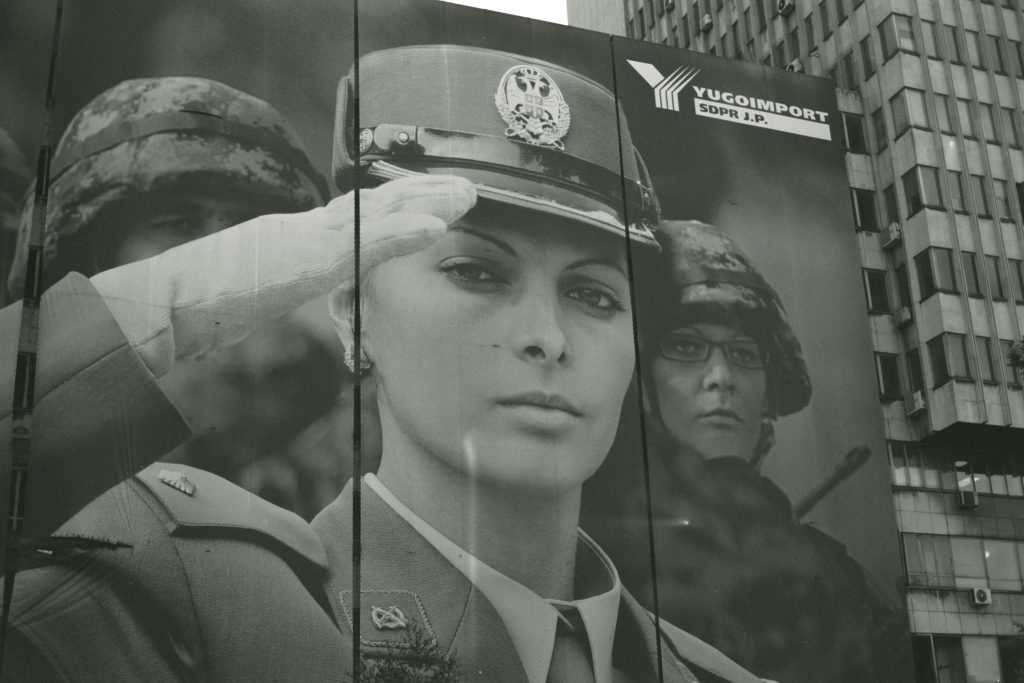
About the photoA billboard of three women solders Photo: Photo by Onur Kurt


