Rise to Peace

National Defense and military readiness consistently depend on the organizations who continuously plan for adaptations in preparation of the battlespace. As we have shifted from a more conventional means of attacks to asymmetrical attacks via artificial intelligence utilization, the game has changed. The doors remain the same, but the burglars are now faster, better equipped, and enabled with machine learning and persistent attacks. AI models can recognize connected servers, critical vulnerabilities, new exploitations and shortcomings in human coded programming. (Anthropic, 2026; Deen, 2026) These continuously exposed systems require an enhanced detection methodology to respond inside of these controlled networks were planning around what the attackers can do it is imperative.
It is important to separate the signal from the noise. In remote sensing signal is the meaningful information that advances a goal while the noise is a random interference or distraction of low value activity that obscures it. Not every cyberattack is the same, and to act as such would be to anchor in bias as to how to prevent and engage them. AI has not invented new ways to attack infrastructure, it has simply collapsed the time, cost, and expertise needed to exploit weaknesses defenders already knew about. (Axios, 2026)
What Defense and Security Leaders Should Change
What we are witnessing is the enabling of bad actors who might not necessarily possess the critical expertise to engage in the attacks themselves, however, the utilization of AI as a weapon to engage in that exploitation has expanded (Deen, 2026; SecurityWeek, 2026). The range of weaknesses an adversary can investigate and penetrate has rapidly widened over the recent years.
In May 2026, Google reported a criminal operation built around a previously unknown flaw in a popular web-based administration tool that let anyone holding a valid password bypass the second authentication factor. Google assessed with high confidence that an AI model supported the exploit’s discovery and development and worked with the vendor to disrupt the planned campaign (Google Threat Intelligence Group, 2026a).
Cybersecurity managers and security operations center (SOC) analysts are tasked with handling the frontline detection, triage and incident response. Managers must now be tasked with how to better allocate skilled personnel to mitigate risk and handle escalations and policies dynamically (Australian Signals Directorate’s Australian Cyber Security Centre, 2025a). The creation of firewall dashboards and security information and event management (SIEM) solutions require the normalization of real time analysis and response to these growing AI attacks (CISA, 2025).
This means it shifts towards a speed versus efficiency conundrum. The AI assisted attacks make speed important (CrowdStrike, 2026a), however the best and fast defensive action can also interrupt the attack. It is a continuous chess match where one system is working against another, and one person is working against an adversary. Speed lends itself to the ability to quickly verify an exposure and contain it while the efficiency measures how much mission risk can be reduced with limited-service interruptions and preemptive security measures.
Critical Vulnerabilities and Exposures
PHP2Shell illustrates where speed and efficiency reinforce each other. As adversaries use AI to interpret security patches more quickly, every hour an exposed system awaits protection can matter. (Google Threat Intelligence Group, 2026b).
On October 21, 2026, the PHP Group disclosed and patched two critical vulnerabilities in PHP, the programming language that runs much of the web behind the scenes: CVE-2026-109618 and CVE-2026-109619, both rooted in how it manages memory (PHP Group, 2026). The first arises when PHP runs out of memory while request data is only partly set up, so cleanup code may treat the incomplete data as valid; think of a clerk acting on a form that was only half filled out. The second occurs because “request-owned internal state can survive after its backing memory has been freed” (PHP Group, 2026), much like a clerk using an old locker number after the locker has been reassigned. Both flaws could let an attacker run code on affected web servers without logging in (BleepingComputer, 2026).
Germany, Belgium, and Japan responded by taking government websites or online services offline while they applied fixes (Reuters, 2026). In the United States, the response took the form of warnings rather than confirmed shutdowns: the National Security Agency advised taking systems offline if they could not be updated immediately (Sivesind, 2026), and CISA set an October 29 patch deadline for federal civilian agencies (ITPro, 2026).
Industrial operators face the same acceleration. In August 2026, the NSA, CISA, FBI, Department of Energy, and Environmental Protection Agency warned that unnamed actors were using AI-generated scripts, disguised as monitoring tools, against exposed Siemens controllers in manufacturing, energy, and water (NSA et al., 2026).
Closing the Gap
In 2025, more than 48,000 Common Vulnerabilities and Exposures (CVE) records were published, roughly 132 per day (Mondoo Security Research Team, 2026). From July through September 2026, the CVE registry logged nearly 37,000 new records, roughly 400 per day (Reuters, as cited in Pillitteri, 2026). Only a small fraction are ever exploited, which is why the Cybersecurity and Infrastructure Security Agency (CISA) maintains a separate Known Exploited Vulnerabilities (KEV) catalog of flaws confirmed under active attack (CISA, n.d.).
As cyber security managers utilize AI to leverage better security, bad actors can leverage the same AI to infiltrate before patches are made. Google has already found an attacker framework that compares code before and after each security patch, drafts an exploit, and runs it without human intervention (Google Threat Intelligence Group, 2026b). Once a critical vulnerability has been identified, AI generated scripts can help malicious actors recognize what they are seeing once they gain access and what they should be targeting (Deen, 2026). AI agents are able to target government agencies just as much as private organizations (CrowdStrike, 2026b).
Not every analyst agrees that AI’s offensive uplift is as dramatic as the headlines suggest. In the best-documented AI-assisted attack on a water utility, Dragos found no novel industrial-control capabilities, and the intruders never reached the control systems (Deen, 2026). After the PHP2Shell patches, hundreds of claimed exploits proved non-functional and were likely AI-generated, adding noise rather than capability (Google Threat Intelligence Group, 2026b).
A government agency can patch its own servers but may still have to rely on external coordination. Whether this is maintenance portals, logs and records, or control systems the speed in which cybersecurity managers and analysts can react and protect these systems becomes the question. How long is it taking these systems to detect attacks or intrusions? Can we rely on the people who are engaged in defense? And how do we better enable them to carry out their mission in directive to be more successful?
What remains to be seen in the coming decade will be how quickly national defense can use machine speed paired with trustworthy human judgment. Deterrents previously rested on what an adversary could destroy and what we could protect, but what has become increasingly evident is that it is more about what we can verify, restore, and continue to run under the pressure of consistent and persistent attacks.
Technology, Cybersecurity & Online Extremism
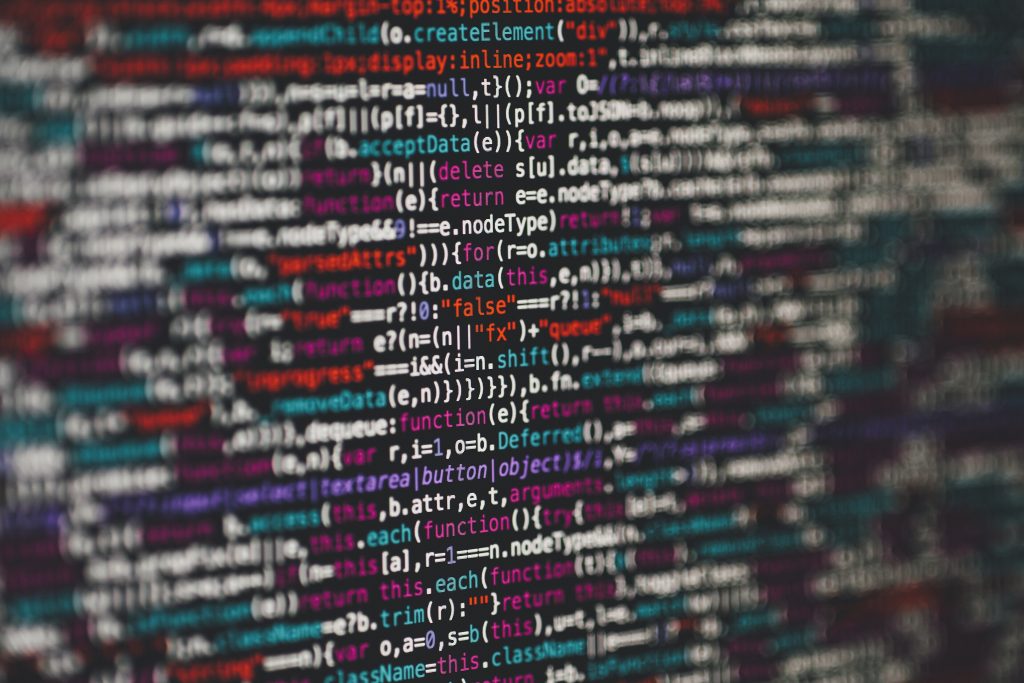
About the photoClose-up of HTML, PHP, and Java source code on a computer screen. Two critical flaws in PHP's core, known as PHP2Shell, were patched on October 21, 2026. Photo: Markus Spiske