Rise to Peace

The International Court of Justice has found Myanmar responsible for genocide against the Rohingya, the Muslim minority from northern Rakhine State. The court concluded that the only reasonable inference from the evidence was an intention to destroy a substantial part of the group; it also called on Myanmar to facilitate safe refugee return, investigate alleged wrongdoing and make reparations where possible. DW reports on the court’s findings and stated measures
The judgment is a major legal determination, but it is not a protection force or a return agreement. Its central lesson is that international accountability can establish responsibility and obligations; it cannot by itself make Rohingya civilians safe. That requires cooperation, access and verifiable safeguards in a country where the military remains influential and Myanmar’s authorities have rejected the genocide allegation.
A legal finding with practical limits
The case was brought by The Gambia under the 1948 Genocide Convention, which allows one state to bring a case against another over alleged breaches. The court’s ruling is final and cannot be appealed. But the ICJ has no independent means of enforcing its decisions, a constraint that leaves implementation dependent on Myanmar’s conduct and on diplomatic pressure from other states. France 24 explains the case’s legal basis and the court’s enforcement limits
The finding followed the 2017 military operations in Rakhine State. A UN fact-finding mission estimated that around 10,000 people likely died in the operations that followed attacks by a Rohingya armed group on security installations; about 700,000 people fled to Bangladesh. Myanmar’s military said it was conducting a counterinsurgency against insurgents. The court, weighing the evidence together, found genocidal intent and cited killings, sexual violence and attacks on civilians fleeing.
These accounts are not equivalent legal conclusions: Myanmar’s stated justification does not erase the court’s finding. Nor does the finding mean that every reported act was individually adjudicated or that individual criminal prosecutions have taken place. The ICJ decides disputes between states; it does not prosecute individual defendants. The distinction matters for survivors seeking justice and for policymakers assessing what the ruling can deliver.
Return depends on conditions, not announcements
Calling for safe return is meaningful only if safety can be assessed in practice. Refugees need to be able to return voluntarily, without renewed persecution, and with credible protection against abuses. The ICJ’s call for Myanmar to facilitate safe return does not itself establish those conditions or ensure access for independent monitors. Myanmar’s earlier refusal to provide requested information and access to evidence, described during the proceedings, underlines how hard it may be to verify implementation.
That makes return numbers a poor measure of progress. A process that moves people across a border without dependable security and rights safeguards could expose them to further harm. Bangladesh, where most Rohingya refugees remain, also carries a substantial humanitarian burden; but pressure to relieve that burden must not turn refugee return into a substitute for addressing the causes of flight.
The harder work is to connect the court’s determination to protection that can be checked. States engaging Myanmar should press for cooperation with investigations and for access needed to assess conditions, while making clear that any return must be voluntary and safe. Bangladesh and humanitarian agencies can keep refugee protection central and resist treating repatriation figures as proof of success. Those approaches may sustain leverage and reduce immediate risk, but they face serious limits: Myanmar can withhold access, and outside governments cannot guarantee compliance by issuing statements.
Diplomacy must preserve the standard
The judgment also tests whether governments will defend impartial international adjudication when a ruling carries political costs. Before the decision, the Guardian reported warnings from US officials about the court and concerns that Washington could sanction judges; it also noted that Myanmar denied genocide and said its campaign targeted an insurgency. The Guardian reported on those warnings and the competing positions
States should avoid treating the case as a tool for pressuring opponents or shielded allies. The Gambia’s case concerns Myanmar and the court’s legal determination in this dispute; it should not be reduced to a proxy for other conflicts. Consistent respect for independent judicial decisions protects the credibility on which future accountability depends. It may also carry diplomatic costs, particularly where powerful governments view court decisions as a threat to their interests.
The judgment cannot return the dead, repair every injury or guarantee that Rohingya families can go home safely. It does, however, establish a clear legal finding and put obligations on record. The measure of its wider value will be whether governments use that finding to demand cooperation and verify safeguards—not whether the court’s words are mistaken for enforcement.
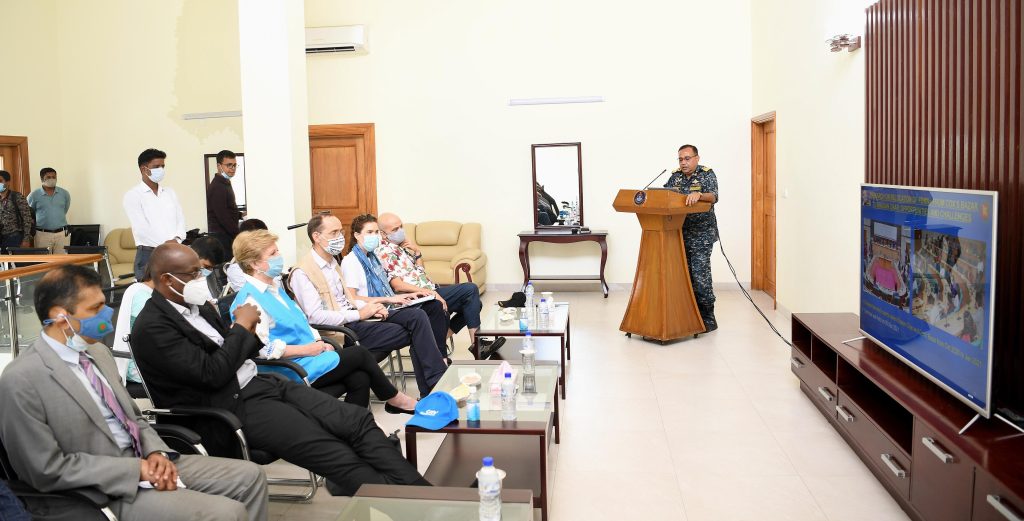
Illustrative photo (not of the events reported). Featured image: Press Information Department / Wikimedia Commons, Public domain.
Rise to Peace blog #Research Analysis #rise to peace #Rohingya ICJ ruling
About the photoIllustrative photo (not of the events reported): A delegation led by Gillian Triggs, Assistant High Commissioner for Protection, and Raouf Mazou, Assistant High Commissioner for Operations, of the United… Photo: Press Information Department / Wikimedia Commons (Public domain), 16 October 2025. Photo: Press Information Department / Wikimedia Commons