Rise to Peace

Yemeni pro-government forces backed by Saudi Arabia say they are withdrawing troops from the Bab al-Mandab area to reinforce defenses around Aden, the interim seat of Yemen’s internationally recognised government. The Southern Armed Forces described Aden and neighbouring governorates as a priority after weeks of intensified fighting with the Houthi movement. Houthi-run media say the movement has taken control of the territory the forces left. BBC News reported the redeployment and the competing claims about the area.
The decision exposes a hard security lesson: a government cannot protect a capital and a strategic route as separate military problems when the forces, territory and command arrangements needed for both are contested. Redeployment may be necessary to address an immediate threat, but without coordinated planning it can shift danger from one vulnerable area to another, putting civilians and maritime access at risk together.
One redeployment, two exposed priorities
The Bab al-Mandab is the narrow waterway connecting the Red Sea with the Gulf of Aden; control of the surrounding coast and islands can affect access to a major international shipping route. The Southern Armed Forces said they were withdrawing from Dhubab Airport and the Bab al-Mandab area to strengthen other front lines. The Houthis had seized territory in the area in a September offensive, while pro-government forces later said they had secured the strait. The latest withdrawal makes clear that a claim of control is not the same as the capacity to hold ground while meeting other defense demands.
According to France 24, military sources said Houthi forces were advancing to within 60 kilometres of Aden, prompting government forces to reinforce the city. France 24 reported the reported advance toward Aden. These accounts offer a plausible immediate reason for shifting forces, but they do not establish the full military picture or how long the deployment can be sustained. The government’s stated priority is to defend the interim capital; that is a real security responsibility, not evidence by itself that the withdrawal was avoidable.
The competing demands are consequential because Aden is both a political center and a city exposed to attack, while the Bab al-Mandab area is part of a maritime corridor with wider economic significance. BBC reports that the Houthi capture contributed to a surge in global oil prices after Saudi Arabia had relied on Red Sea exports amid the effective closure of the Strait of Hormuz during the US-Israeli war with Iran. It also reports that the Houthis said they posed no threat to international shipping through Bab al-Mandab, while threatening Saudi vessels. The distinction matters: reported threats to Saudi shipping and the economic effects of a territorial seizure do not, on their own, establish an intention to attack all international vessels.
Fragmentation makes force choices harder
Yemen’s internationally recognised government and the Saudi-backed forces acting on its behalf face a conflict that has repeatedly altered who controls territory. The Houthis ousted the government from Sanaa in 2014; a Saudi-led coalition intervened in 2015 to try to restore government rule. A four-year informal ceasefire began to unravel in July, when the Houthis announced a maritime embargo against Saudi Arabia and began missile and drone attacks on Saudi airports, oil facilities and Red Sea tankers. The Houthis said they were retaliating for a Saudi blockade of ports and airports in their territory and an air strike on Sanaa airport. These are the parties’ stated explanations; they do not settle responsibility for every attack.
In such a conflict, moving troops is not simply a choice between a city and a strait. It reflects the costs of deploying forces across separate fronts, the need to maintain defensible supply and command arrangements, and uncertainty about whether different armed formations will act as one. If the authorities cannot reliably coordinate who holds a position, who reinforces it and how civilians are protected, a territorial advance can force repeated emergency redeployments. The result can be a cycle in which a gain on one front weakens another without producing durable security on either.
The civilian consequences are already serious. A UN human-rights spokesperson cited by BBC said more than 60% of documented civilian casualties since the fighting escalated in August were women and children. BBC also reported nearly 330,000 people displaced and hundreds killed as the fighting intensified, as well as a Houthi attack on Aden’s presidential palace on 15 October that killed five people and injured 16. Those figures underline why assessments of a successful defense must include civilian safety and displacement, not only which force occupies a position.
Plan for what can actually be held
The immediate task for Yemen’s internationally recognised government and its Saudi-backed partners is to coordinate a realistic defense plan across Aden and the Bab al-Mandab approaches. That means clarifying command responsibilities, setting priorities for limited forces, planning how positions can be supplied and reinforced, and making civilian protection part of operational decisions. Coordination could reduce gaps created by separate deployments and help commanders understand the risks their choices transfer to other fronts. But it cannot eliminate the shortage of forces or resources, resolve political divisions, or guarantee that the Houthis will not advance.
Maritime security should not become a justification for treating local communities as expendable, or for assuming that a military presence alone will secure shipping. Any plan must distinguish confirmed attacks from threats and claims, preserve space for humanitarian movement, and avoid promises of control that forces cannot sustain. The international actors concerned with Red Sea shipping can support deconfliction and diplomacy, but lasting protection depends on the parties’ choices inside Yemen and on credible arrangements for local security.
The lesson is not that Aden should be left exposed to preserve a shipping route, or that the strait can be written off to reinforce the capital. It is that a security plan which does not account for the interaction between both priorities will repeatedly move the danger instead of containing it. Defending territory matters; knowing what can be held, under whose command, and with what protections for civilians matters just as much.
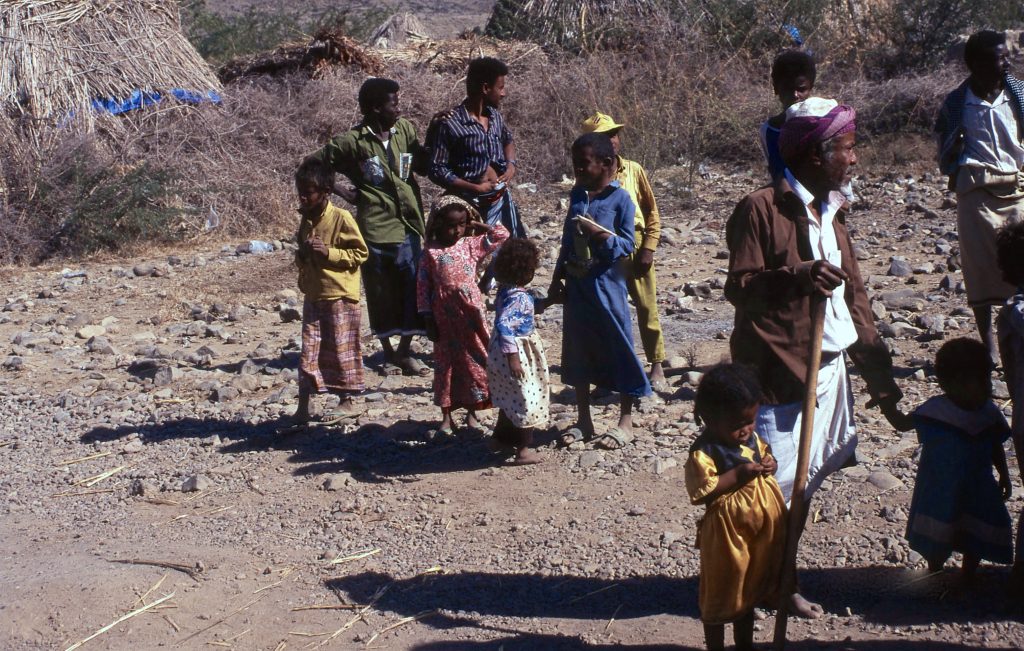
Illustrative photo (not of the events reported). Featured image: Werner Bayer / Wikimedia Commons, CC0.
Rise to Peace blog #Research Analysis #rise to peace #Yemen maritime security
About the photoIllustrative photo (not of the events reported): Le Yémen, en forme longue la République du Yémen (arabe al-Yaman, اليَمَ est un pays arabe situé à la pointe sud-ouest de… Photo: Werner Bayer / Wikimedia Commons (CC0), 10 August 2016. Photo: Werner Bayer / Wikimedia Commons