AI-generated image depicting the Pakistan–Taliban conflict, showing armed fighters facing off against a backdrop of smoke, fire, and national flags. The scene symbolizes escalating cross-border tensions and instability. February 27, 2026.

Pakistan vs. the Taliban: The Monster Comes Home

Pakistan’s defense minister just called the current Afghanistan–Pakistan fighting “open war.” That’s not a headline. That’s an admission that the old arrangement is dead: sponsor versus client has turned into state versus state, and the border is about to punish ordinary people again.

None of this is new. It’s the final act of a play Pakistan’s security establishment has been staging for decades—using Afghanistan as strategic depth, treating militants as assets, and calling the blowback “bad luck” when it arrives.

Step one: build the pipeline

In the 1980s, the anti-Soviet jihad was backed through a covert pipeline that ran through Pakistan’s ISI. That war produced fighters, networks, money routes, and a whole culture of armed politics that did not disappear when the Soviets left.

When the Cold War moved on, Afghanistan didn’t get peace. It got a battlefield full of factions and patrons—each side claiming faith and nation while shelling cities and carving power. That chaos didn’t just “happen.” It was fueled.

Step two: stir the civil war, then pretend to be the firefighter

The 1990s were not a clean chapter. Afghan mujahideen factions turned their guns on each other, Kabul bled, and regional actors kept picking favorites. Pakistan didn’t just watch from the fence. It played the game—again.

Then came the “solution” Pakistan helped usher in: the Taliban.

The Taliban formed in the early 1990s, drawing from networks of former anti-Soviet fighters, in the wreckage of a broken state and a civil war.

And when the Taliban took power in the 1996, Pakistan wasn’t neutral. During the Taliban’s 1996–2001 rule, only three governments recognized them: Pakistan, Saudi Arabia, and the United Arab Emirates.

That’s not “neighborly concern.” That’s ownership.

Step three: keep feeding the baby

Here’s the part Pakistani officials hate hearing out loud: the relationship wasn’t just political. Human Rights Watch documented Pakistan’s support for the Taliban in terms that aren’t vague—soliciting funds, bankrolling operations, arranging training, recruiting manpower, planning/directing offensives, facilitating shipments of ammunition and fuel, and even reports suggesting direct combat support at times.

That’s not hospitality. That’s a supply chain.

After 2001, the Taliban were knocked down—then they kept regenerating. The sanctuary story became a pattern for years, including persistent reporting and analysis around Taliban leadership nodes operating from inside Pakistan, often described under the “Quetta Shura” label.

Pakistan’s script stayed the same:

  • “We have influence.”
  • “We have no control.” Both can’t be true—especially when the outcome stayed consistent for two decades.

The bill Afghanistan paid: blood, not opinions

This isn’t about who “feels” right. The numbers are there.

UN-documented civilian harm in Afghanistan from 2009 to 2020 totaled more than 100,000 civilian casualties—killed and wounded. Year after year, civilians ate the cost of insurgency tactics, IEDs, suicide attacks, assassinations, and counter-warfare that never protected the public the way it promised.

And the Taliban don’t get to wash their hands by pointing at everyone else. Pakistan may have helped build the environment, but the Taliban chose to become what they became—an engine of coercion that treated civilian life like a bargaining chip.

2011: Abbottabad didn’t help Pakistan’s credibility

Pakistan can deny prior knowledge all day. But the fact is simple: Osama bin Laden was found and killed in Abbottabad in 2011, and Pakistan publicly denied it knew beforehand. That event didn’t just raise eyebrows; it permanently damaged the credibility of every “we didn’t know” claim that came after.

2021: the victory mood gave it away

When Afghanistan fell in August 2021, Pakistan’s posture didn’t look like a worried neighbor. It looked like a side that believed it had won something.

In early September 2021, Pakistan’s ISI chief Lt. Gen. Faiz Hameed flew to Kabul while the Taliban were consolidating power; Reuters reported Pakistani officials saying he could help the Taliban reorganize. The image and the timing said more than any denial ever could.

2026: sponsor to enemy — and civilians will pay first

Now we’re here. Pakistan says the Taliban are enabling militants who hit Pakistan; the Taliban deny responsibility and accuse Pakistan of exporting blame. Pakistan has struck Taliban targets, including in major Afghan cities; the Taliban have retaliated, including with drones, and both sides are trading claims that are hard to independently verify in the fog of escalation.

This is Pakistan’s Indominus rex moment—the Jurassic World creature that was engineered, fed, displayed like a trophy… until it broke containment and started hunting on its own terms.

Pakistan built a monster. The Taliban grew into it. Now Pakistan is angry that its “spoiled baby” has teeth.

Call it fate, call it consequences, call it moral accounting—whatever language you prefer. But it fits the pattern: you raise proxies long enough, you eventually fight them.

What must happen next

If this turns into a sustained war, it won’t “solve terrorism.” It will expand it. It will harden militants on both sides and trap border communities in a permanent loop of displacement, revenge, and recruitment.

Here’s what must happen — clean and specific:

1) The world must not recognize the Taliban. No legitimacy for an extreme regime that bans girls from education and rules through fear. This is non-negotiable.

2) Pakistan must stop striking Afghan cities. No airstrikes on major population centers. When cities become targets, civilian deaths stop being “collateral” and become policy.

3) India must end its proxy games in Afghanistan. Stop using Afghan soil as a pressure point against Pakistan. Afghanistan cannot be turned into a battlefield for someone else’s rivalry.

4) Start real Afghan peace talks — now. The international community, led by the United States and President Trump, must restart a serious political track (Doha or a Doha-style process) for Afghan reconciliation.

That means everyone at the table: Afghan leaders in exile, leaders inside the country, all ethnicities and factions, the Northern Alliance legacy figures, civil society voices — and yes, the Taliban too — because a settlement without them is fantasy, and war is not a solution.

5) Build one outcome: an inclusive democratic system. A legitimate government that represents all Afghans, protects rights, and ends monopoly rule. Afghans have paid in blood for 45 years. Enough.

Speeches won’t fix this. Posturing won’t fix this. Only a political deal will.


Ahmad Shah Mohibi (WarGuy)
Ahmad Shah Mohibi, Founder of Rise to Peace and Director of Counterterrorism, served as a U.S. advisor in Afghanistan during Operation Enduring Freedom and later supported national security initiatives in Washington, D.C.
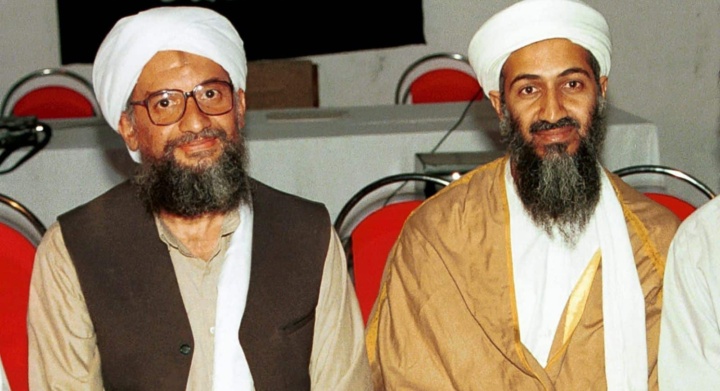
the US had assassinated al-Qaeda commander Ayman al-Zawahiri

US Assassinate Ayman Al-Zawahiri, Al-Qaeda’s Number Two

After months of meticulous planning and geographic calculations, President Joe Biden announced that the US had assassinated al-Qaeda commander Ayman al-Zawahiri, also known as Al-Qaeda number 2 in Osama Bin Laden’s leadership, in a drone strike in Afghanistan. Al-Zawahiri, together with the attackers of 9/11, were then labelled as the most wanted after the tragedy back in 2001.

He was assassinated on Sunday during a CIA counterterrorism operation in Kabul, the capital of Afghanistan. The strike was finally called off at 9:48 p.m. ET (0148 GMT) on July 30 by an unmanned aerial strike launching alleged “hellfire” missiles.

The drone reportedly fired two missiles at Zawahiri as he was on the balcony of a safe house, according to officials. Other members of the family were nearby, but they were unharmed, and they added that Zawahiri was the only victim of the incident. “Now justice has been delivered and this terrorist leader is no more,” Joe Biden added.

A senior administration official told reporters that Zawahiri had been in hiding for years and had not been traced easily due to his remote activities, obviously trying to live his life in the shadows, as the CIA had been eyeing him in the areas of Pakistan and Afghanistan. The operation to locate and kill him was the result of “careful, patient, and persistent” work by the counter-terrorism and intelligence community.

CIA’s Effort to Trace Zawahiri

The United States government had been cognizant of a network that it believed backed Zawahiri for a number of years, and for the last year, following the withdrawal of American forces from Afghanistan, officials had been on the lookout for signs of Al Qaeda’s presence in that nation.

CIA officials discovered this year that Zawahiri’s family—his wife, his daughter, and her children—had moved to a secure home in Kabul and later traced Zawahiri there.

In early April, intelligence officers began alerting senior government officials after emerging more certain over several months that they had accurately identified Zawahiri inside the Kabul safe house. President Joe Biden was subsequently briefed by National Security Advisor Jake Sullivan.

The official said that to guarantee that the United States could cogently carry out an operation to kill Zawahiri without impeding the structural integrity of the building and with the least amount of risk to bystanders and Zawahiri’s family, officials probed the construction and condition of the safe house and closely examined its inhabitants. They have also discussed the potential legal repercussions of this strike, particularly given that it will take place in Afghanistan.

The administration also made sure that the severity of the attacks on civilians was kept to a minimum, if not none. Finally, the attack took place on July 30 and killed Zawahiri.

The Taliban Condemns the Drone Strike

According to a statement from the Taliban’s spokesman, Zabihullah Mujahid, the incident happened on Sunday. The ruling Islamist radicals severely criticized it as a violation of “international values” and the 2020 agreement on the withdrawal of U.S. troops.

However, US officials insisted that the operation was legal nevertheless because the killing of Zawahiri comes nearly a year after US troops completed their withdrawal from Afghanistan on the orders of Mr. Biden, bringing an end to a 20-year military presence there.

The Taliban vowed not to permit al-Qaeda or any other extremist group to operate in regions they control as part of a 2020 peace agreement with the US, but the US believes that the Taliban knew all along about Zawahiri’s presence and they have provided shelter. From there, the violation of the Taliban’s peace agreement with the US has been visibly infringed.

Netizens’ Reaction to the US air strike

Many reactions surfaced after the announcement by Biden on the killing of Zawahiri. People have been debating whether the US should no longer intervene in Afghanistan after the withdrawal of US troops because it risks more indiscriminate killings and human rights violations. It seems that other people have also been comparing the US’ proactive efforts to counter terrorism in vulnerable states and yet no actions were taken against Russia; some have remarked that the issue is long overdue and the US has double standards on so-called justice.

Moreover, Canada’s Prime Minister expressed his support for the counterterrorism effort, saying: “The death of Ayman al-Zawahiri is a step toward a safer world. Canada will keep working with our global partners to counter terrorist threats, promote peace and security, and keep people here at home and around the world safe.” Furthermore, we should never underestimate the officers who have gone above and beyond their mission to eliminate the threat not only in America, but globally.

Kristian Rivera, Counter-Terrorism Research Fellow