Closure of the Strait of Hormuz: Is Alaska the Plan for a Bailout? 

By Lola McEwen – Rise to Peace Fellow 

This past year, President Donald Trump met with President Vladimir Putin at a summit at Joint Base Elmendorf-Richardson (JBER) in Anchorage, Alaska, primarily discussing the state of the war in Ukraine. This invitation marked a huge step Putin and the Kremlin likely did not believe would happen anywhere in the near future from the many nations who sided heavily with Ukraine after Russia’s 2022 invasion. Putin’s travel had been obviously limited to only countries that were in support of Russia, North Korea and Belarus. While many journalists were expecting a traditional press conference, it seemed the two leaders were simply there to make pre-planned statements, including Putin addressing Russia’s history with Alaska. While not much was said regarding the war in Ukraine, Putin did express his opinion that a ceasefire could not be negotiated until the “root causes” of the conflict could be resolved [5]. Trump only indirectly referenced Ukraine, stating that there needed to be an end to the bloodshed, saying that he and Putin had an “extremely productive meeting”, yet there did not seem to be any real steps to solving the conflict. The summit did seem to open up doors for future United States and Russia diplomatic relations, with Putin making a rare statement in English stating that they could meet, “Next time in Moscow”[5]. 

What Does This Mean for Diplomacy Between the Two Countries?

With the recent mending of ties between the United States and Russia, it makes us wonder just how open those doors are for future diplomacy between the two nations. According to American financier Gentry Beach, those doors have already been thrown wide open, with a deal being made between Beach and Russian natural gas company Novatek [3]. While Beach confirmed the relationship, amid failure to admit association with Beach by Novatek, Beach did admit that they still had several hurdles to overcome to be able to continue with the deal to liquefy natural gas in remote Alaska. Beach has long been associated with the Trump family, originally a college friend of Donald Trump Jr. (Soldatkin & Khalip, 2026). Beach even helped raise funds for Trump’s first election campaign in 2016. The deal was allegedly made between Beach and Leonid Mikhelson, Novatek’s chief executive, in Dubai and Europe last year [4]. Beach denied any role that the Trumps could have played in this deal, saying this had nothing to do with the U.S.-Russia peace talks, but that Washington and Moscow alike were both very well informed about the negotiations at hand [4]. While Beach and Novatek claim to not tie this deal explicitly to their respective governments, it does bring multiple questions of what sanction laws are in play for these dealings, and what future economic deals between the two countries can come of this, even with the war in Ukraine continuing. 

What Sanctions Are in Place? 

While Russia originally had many sanctions put on them starting in 2014 for undermining Ukraine such as EO 13660 and EO 13662, additional sanctions were placed in 2022 following the war in Ukraine specifically the ban on Russian oil importing EO 14066, and a ban on new investment and services to Russia EO 14071. The latter are most likely in play with Beach’s deal in Alaska for the LNG Project, with TotalEnergies, a french company, at the head. TotalEnergies had a previous relationship with Novatek, including holding a major stake in Novatek which they have reported an inability to be able to sell the rest of their stake due to previous agreements. However, it is starting to look like TotalEnergies will not have to worry about selling the rest of their stake as they may be back in business with Novatek once again, the question is, how can Novatek legally work on the Alaska LNG Project with the amount of sanctions that are working against them? 

What Do Alaskans Think? 

Alaskans have responded against the news of Novatek’s involvement, with Anchorage Daily News stating their own opinion that, “Alaska energy projects should benefit Alaskans, not Russians.” The article makes it clear that the Russian sanctions were put into place because of Russia’s international law violations, human rights offenses, election interference and hostile cyberattacks [2]. The article also states, “What do we stand for if we drop sanctions when an opportunity rises?” With the current sanctions in place, it seems that Novatek and Beach would need approval from both Putin and Trump, which they seem to have, without the knowledge of the Alaskan people which this deal disrupts the most. The article also claims that there have been confusing statements made, including Novatek stating that U.S. made equipment will be used, when Beach claimed that Novatek already has partially built one of the units. The article also brings up how this would affect the villages, including tankers, who will have to stay several miles offshore considering the North Slope has an extremely shallow shoreline, and how whale hunting will significantly decrease due to tanker traffic. It is simply not plausible to consider an option without a pipeline, especially considering that the Alaskan people have been promised for years that the LNG pipeline project from the North Slope to Nikiski, Alaska, will be implemented, meaning affordable natural gas for several communities. The authors also make the point that Alaska is a resource-based economy, meaning this pipeline could support several of the next generations of Alaskans to live off of and to work for. This can also reduce the risk of pollution in the Kuskokwim River which is currently the route that diesel tankers take to supply gas to villages [2]. 

How Does the Conflict in the Middle East Affect the LNG Project? 

With the developing Iranian-Israel and U.S. conflict in the middle east, Russia has offered to supply Europe with oil that has been depleted by the closing of the Strait of Hormuz, with Europe declining help from Russia and steadfastness on their sanctions from the start of the Ukraine war. However, Asian countries have been affected the worst from the conflict, leading to the acceptance of Russia’s offer boosting their economy for the first time since Russia invaded Ukraine. With the recent updates on the LNG project after years of halt, especially with the advancement being at the hands of a Russia-U.S. agreement on lowering sanctions, it does make one wonder whether the United States considered Russia’s oil supply when making the decision to enter a conflict with Iran, knowing the risk to the Strait of Hormuz, and could Alaska have played a major role in this decision without the public knowing? 

What Is Left for the Project to Get the Go-Ahead? 

According to Reuters, Glenfarne, the company that owns 75% of the project, says that the war in the middle east has sparked Asia’s interest in the project, especially since the Alaska LNG project does not have any “choke points” according to Brendan Duval, Glenfarne’s CEO [1]. The open waters that surround Alaska is a significant selling point, in contrast to the Strait of Hormuz that can be and is currently significantly impacted by war and territory control. While the LNG project is still delayed because of the failure to meet the target of signing binding offtake deals for 80% of the planned export capacity of 20 million metric tons a year of liquefied natural gas, the project is already at an agreed upon 13 million, meaning they only need a signed 3 million more, which may very well be met with credits to the conflicts in the middle east. Duval claims that Thailand, Taiwan, Japan, and Korea have all signed on the deal, most importantly because of the positioning of Alaska [1]. Japan’s two biggest LNG importers, JERA and Tokyo Gas, have already reportedly agreed to deals to buy 2 million metric tons a year from the Alaska LNG project. Duval also stated that a Greek firm Danaos aims to deliver LNG carriers around the time the project is expected to begin, which Duval states is 2031. Duval also claims that another bonus to the Alaska LNG project is that the ice flows allow regular LNG carriers, allowing any LNG carrier globally to come and go [1].

Was This a Strategic Move Made Several Months Ahead? 

While Europe may continue to ice out Putin, President Trump may have been looking several steps ahead when meeting with Putin last summer in Alaska. While Europe continues to condemn the United States move to decrease sanctions on Russia, the United States economy may remain significantly more stable than European countries following the Iranian conflict with this seemingly new deal with Russia, beginning with the Alaska LNG project. This move may also strengthen ties between the United States and Asian countries, with Asia looking for a bail out after the unexpected closing of the Strait of Hormuz, causing disaster for all oil companies not only exporting from the middle east, but for countries that imported from them. The International Energy Agency may also feel relief if the United States is able to help supply not only themselves, but also several other countries with the Alaska LNG project, even though it comes with the cost of supporting Russia’s economy. 

References 

[1] Golubkova, K., Obayashi, Y., & Reuters. (2026, March 15). Spurred by Gulf War, Alaska LNG aims for go-ahead decisions in 2026-27 and exports in 2031. Reuters

https://www.reuters.com/business/energy/spurred-by-gulf-war-alaska-lng-ai ms-go-ahead-decisions-2026-27-exports-2031-2026-03-16/ 

[2] James, M., & James, D. (2026, March 5). Opinion: Alaska needs a gas pipeline, not a North Slope export shortcut. Anchorage Daily News.

https://www.adn.com/opinions/2026/03/05/opinion-alaska-needs-a-gas-pip eline-not-a-north-slope-export-shortcut/ 

[3] Soldatkin, V., & Khalip, A. (2026, February 20). Trump ally ties up with Russia’s Novatek on natural gas in Alaska, NYT reports. Reuters. Retrieved March 2, 2026, from 

https://www.reuters.com/business/energy/trump-ally-ties-up-with-russias-n ovatek-natural-gas-alaska-nyt-reports-2026-02-20/ 

[4] Troianovski, A. (2026, February 19). With ‘Tremendous’ Deals at Stake, Trump Is Bringing Russia in From the Cold. The New York Times. Retrieved March 2, 2026, from 

https://www.nytimes.com/2026/02/19/us/politics/trump-russia-deals-novate k.html 

[5] Trump and Putin Alaska summit: Five takeaways from the meeting. (2025, August 15). BBC. Retrieved March 1, 2026, from 

https://www.bbc.com/news/articles/c4gj9er0x0zo

Biometrics, Surveillance & Rights: The DHS Vision vs. Civil Liberties

By Mildred Miranda – Rise to Peace Fellow

The expansion of biometric integration across the Department of Homeland Security in 2026 represents a pivotal transformation in American security governance. The proposal to unify facial recognition, fingerprint databases, and interoperable identity systems across agencies signals a decisive shift toward centralized technological coordination. The justification for this integration rests on counterterrorism efficiency, border security enhancement, and investigative speed. The modernization effort reflects the belief that fragmented databases create operational blind spots exploitable by transnational extremist networks. The consolidation of biometric architecture promises streamlined identification processes and reduced interagency lag. The national debate emerging around this initiative demonstrates that technological capacity now intersects directly with constitutional interpretation. The broader implications of this development extend beyond administrative efficiency and into foundational questions about surveillance, democratic accountability, and civil liberties protection.

Historical Context: The Post-9/11 Security Evolution

The evolution of biometric systems in the United States traces back to the security recalibrations following the September 11 attacks. The institutional emphasis on identity verification became central to homeland security doctrine, particularly in immigration screening and counterterrorism intelligence. The early adoption of fingerprint databases and traveler screening programs gradually expanded into facial recognition technologies deployed at airports and border crossings. The incremental development of interoperable data platforms reflected a belief that identity certainty enhances national resilience. The maturation of algorithmic recognition systems improved speed and analytical accuracy, encouraging broader operational reliance. The current integration initiative builds upon this two-decade trajectory of technological adoption. The institutional memory of past security failures reinforces the perception that information silos pose unacceptable risk in an era defined by fluid and adaptive extremist threats.

Strategic Rationale: Identity Certainty and Extremism Prevention

The strategic rationale behind unified biometric search architecture emphasizes identity certainty as a cornerstone of extremism prevention. The capacity to cross-reference multiple databases simultaneously reduces the likelihood that individuals operating under aliases evade detection. The integration of biometric identifiers strengthens verification processes at ports of entry and within investigative contexts. The operational appeal lies in speed, as automated matching can replace time-consuming manual coordination. The prevention narrative surrounding this initiative suggests that seamless identification deters exploitation of bureaucratic fragmentation. The assumption underlying this framework is that extremist actors rely upon identity manipulation to facilitate mobility and concealment. The consolidation of systems therefore appears as a rational modernization measure within counterterrorism strategy. The operational benefits, however, must be assessed alongside broader governance consequences that extend beyond tactical efficiency.

The Limits of Technology: Radicalization Beyond Borders

The preventive utility of biometric systems must be examined within the contemporary landscape of radicalization. The emergence of decentralized online extremism complicates the assumption that identity verification alone disrupts threat pathways. The increasing prevalence of lone-actor mobilization rooted in digital ecosystems shifts attention toward behavioral indicators rather than border infiltration. The biometric architecture primarily addresses authentication rather than ideological transformation. The distinction between detection and prevention becomes critical in policy evaluation. The technological capacity to confirm identity does not equate to the ability to intervene in early-stage radicalization processes. The security discourse sometimes conflates these dimensions, overstating the preventive reach of identification systems. The strategic effectiveness of biometric integration must therefore be contextualized within a broader ecosystem of community engagement, behavioral assessment, and digital literacy initiatives.

Constitutional Framework: The Fourth Amendment Challenge

The constitutional debate surrounding biometric expansion centers upon the Fourth Amendment’s protection against unreasonable searches and seizures. The doctrinal question of reasonable expectation of privacy becomes complex when applied to facial recognition technologies. The visibility of a person’s face in public does not necessarily imply consent to perpetual automated tracking. The aggregation of movement data across time transforms isolated observations into comprehensive behavioral mapping. The jurisprudential tension arises from the distinction between human observation and algorithmic surveillance at scale. The centralized integration of biometric systems magnifies this concern by enabling retrospective identification across multiple datasets. The constitutional inquiry therefore extends beyond the act of data collection to the cumulative analytical capacity of interconnected platforms. The democratic legitimacy of such surveillance depends upon carefully calibrated legal boundaries.

Civil Liberties Risks: Due Process and Equal Protection

The civil liberties implications extend beyond search doctrine into questions of due process and equal protection. The integration of biometric databases often interfaces with federal watchlists that carry significant consequences for affected individuals. The risk of misidentification, particularly in systems exhibiting demographic bias, raises concerns about discriminatory impact. The historical evidence of algorithmic disparities in facial recognition accuracy underscores the potential for unequal burden. The permanence of biometric identifiers amplifies harm because errors cannot be corrected through simple credential replacement. The reputational and legal consequences of false positives can include detention, travel restrictions, and investigative scrutiny. The structural challenge lies in ensuring that technological efficiency does not eclipse procedural fairness. The durability of democratic trust depends upon transparent safeguards and accessible mechanisms for redress.

Cybersecurity and Data Protection Concerns

The cybersecurity dimension of centralized biometric integration introduces additional complexity. The concentration of sensitive identifiers within interoperable platforms increases their attractiveness as targets for malicious actors. The irreversibility of biometric compromise distinguishes these data from conventional passwords or identification numbers. The breach of fingerprint or facial recognition databases would produce enduring vulnerability for affected individuals. The strategic calculus of integration must therefore weigh operational gains against systemic exposure. The architecture of storage, encryption, and segmentation becomes a central policy concern rather than a peripheral technical detail. The resilience of the system depends upon investment in cybersecurity infrastructure commensurate with its sensitivity. The governance framework must incorporate breach notification protocols and accountability mechanisms to maintain public confidence.

Function Creep and Expanding Surveillance Mandates

The phenomenon of function creep represents one of the most persistent risks in surveillance policy. The gradual expansion of system use beyond its original mandate often occurs incrementally and without comprehensive legislative review. The initial justification of biometric integration for counterterrorism may evolve into routine application for minor offenses or administrative enforcement. The normalization of expanded access can erode previously accepted boundaries. The absence of explicit statutory constraints accelerates this trajectory. The comparative historical experience of other surveillance tools demonstrates that scope expansion is common when guardrails are ambiguous. The preservation of democratic norms requires anticipatory regulation that anticipates and limits repurposing. The policy architecture must therefore articulate narrow purpose definitions to prevent gradual dilution of civil liberties protections.

Governance Safeguards and Institutional Oversight

The governance of biometric integration depends upon robust oversight and transparency structures. The statutory authorization should define permissible uses with clarity and precision. The involvement of independent auditing bodies can provide continuous evaluation of algorithmic accuracy and compliance. The publication of aggregate usage statistics strengthens democratic accountability without compromising operational secrecy. The establishment of clear data retention limits reduces unnecessary exposure and mitigates privacy risk. The creation of accessible correction procedures ensures that individuals have meaningful avenues to challenge inaccuracies. The embedding of sunset provisions within authorizing legislation compels periodic reassessment of effectiveness and proportionality. The credibility of biometric modernization rests upon institutional willingness to subject technological power to constitutional discipline.

Comparative Perspective: European Union Data Governance

The comparative perspective offered by European Union data governance frameworks illuminates alternative regulatory pathways. The classification of biometric data as sensitive under the General Data Protection Regulation reflects a normative commitment to privacy as a fundamental right. The proportionality principle embedded within European jurisprudence requires that surveillance measures demonstrate necessity relative to legitimate objectives. The European Artificial Intelligence regulatory approach further introduces risk-based oversight of high-impact systems. The restrictions on real-time remote biometric identification illustrate a cautious stance toward expansive monitoring. The emphasis on data subject rights provides individuals with enforceable mechanisms of access and correction. The transatlantic contrast highlights divergent philosophical foundations regarding state surveillance. The American debate may benefit from examining how modernization can coexist with codified privacy safeguards.

Balancing Security and Democratic Tradition

The policy challenge confronting the United States lies in reconciling security imperatives with constitutional tradition. The extremism threat environment remains adaptive and technologically sophisticated. The demand for efficient investigative tools reflects legitimate concern about national resilience. The expansion of biometric integration cannot be evaluated solely through a lens of fear or optimism. The democratic system requires structured deliberation that weighs empirical evidence against normative commitments. The durability of public trust depends upon visible adherence to rule of law principles. The technological momentum driving integration must be matched by legal clarity and oversight capacity. The success of the initiative ultimately hinges not on algorithmic speed but on governance design that preserves legitimacy.

Technology Within a Broader Counter-Extremism Strategy

The intersection of technology and extremism prevention underscores the importance of strategic balance. The detection of identity fraud and cross-border movement can contribute meaningfully to threat disruption. The prevention of radicalization, however, requires complementary investment in community-based programming and digital resilience. The exclusive reliance on surveillance tools risk narrowing the policy imagination. The broader counter-extremism architecture must integrate education, mental health resources, and local partnership frameworks. The emphasis on biometric certainty should not overshadow the human dimensions of prevention. The legitimacy of security institutions is reinforced when communities perceive them as partners rather than monitors. The cultivation of trust therefore constitutes an indispensable component of national security strategy.

Democratic Culture in the Digital Age

The public discourse surrounding biometric integration reflects deeper anxieties about democratic erosion in the digital age. The normalization of continuous surveillance may gradually reshape expectations of privacy. The constitutional system depends upon vigilance in moments of technological transition. The historical pattern demonstrates that emergency powers can become permanent fixtures, absent deliberate constraint. The present debate offers an opportunity to articulate principles that govern future innovation. The embedding of accountability mechanisms at the outset can prevent later retrenchment crises. The societal response to this initiative will signal the resilience of democratic culture. The maintenance of freedom within a technologically advanced security state demands sustained civic engagement.

Economic and Procurement Considerations

The economic dimension of biometric expansion also warrants consideration. The procurement of advanced recognition systems and database infrastructure involves significant public expenditure. The allocation of resources toward surveillance capacity must be evaluated against alternative prevention investments. The cost-effectiveness of integration depends upon demonstrable improvements in threat disruption outcomes. The potential for private sector contractors to influence system design raises additional oversight questions. The transparency of procurement processes contributes to accountability and public trust. The financial sustainability of centralized architecture requires ongoing maintenance and cybersecurity funding. The strategic planning of budgetary priorities should incorporate holistic assessment rather than narrow technological enthusiasm.

International Norms and Diplomatic Implications

The international implications of American biometric policy extend beyond domestic governance. The global diffusion of surveillance technologies often follows precedents set by major powers. The normative stance adopted by the United States may influence emerging regulatory standards in allied democracies. The demonstration of rights-protective safeguards can reinforce international credibility in human rights advocacy. The absence of such safeguards may invite criticism and reduce moral authority. The transnational nature of extremist networks necessitates cross-border cooperation, yet collaboration must respect shared democratic values. The articulation of principled biometric governance can strengthen alliances rooted in rule of law commitments. The strategic narrative accompanying integration therefore carries diplomatic as well as domestic significance.

Ethical Dimensions of Biometric Governance

The ethical dimension of biometric integration encompasses questions of autonomy and dignity. The involuntary capture and analysis of immutable identifiers implicate fundamental aspects of personhood. The philosophical debate concerns whether technological capability justifies comprehensive deployment. The precautionary principle suggests restraint when irreversible consequences are possible. The ethical evaluation must consider both collective security benefits and individual vulnerability. The moral legitimacy of surveillance depends upon proportionality and transparency. The democratic framework requires that citizens understand and consent to the structures shaping their freedoms. The conversation about biometrics thus transcends administrative efficiency and enters the realm of civic identity.

Empirical Evaluation and Algorithmic Accountability

The empirical assessment of biometric effectiveness remains essential to informed policymaking. The measurement of false positive and false negative rates determines practical utility. The evaluation of demographic performance disparities informs equity considerations. The long-term study of deterrence impact requires careful methodological design. The absence of rigorous independent research risks reliance on vendor claims rather than objective evidence. The policy community must insist upon data-driven evaluation prior to expansive deployment. The credibility of integration depends upon demonstrable contribution to public safety outcomes. The scientific transparency surrounding algorithmic performance strengthens both effectiveness and accountability.

Constitutional Governance in the Digital Century

The integration initiative ultimately symbolizes a broader transformation in governance under conditions of digital interdependence. The convergence of data analytics, artificial intelligence, and security policy challenges inherited legal categories. The adaptability of constitutional interpretation will shape the trajectory of technological deployment. The resilience of democratic institutions depends upon their capacity to evolve without abandoning core commitments. The present debate over biometric integration represents a defining test of that adaptability. The balance struck between extremism prevention and civil liberties will influence public trust for generations. The safeguarding of freedom in an era of rapid innovation demands deliberate restraint as well as strategic foresight. The choices made in this policy moment will echo throughout the architecture of twenty-first century security governance.

Sources

American Civil Liberties Union. (2023). The dawn of robot surveillance: AI, video analytics, and privacy threats in U.S. policing. Retrieved from https://www.aclu.org/report/dawn-robot-surveillance 

Cameron, D. (2026). DHS Wants a Single Search Engine to Flag Faces and Fingerprints Across Agencies. WIRED. Retrieved from https://www.wired.com/story/dhs-wants-a-single-search-engine-to-flag-faces-and-fingerprints-across-agencies/

Class action challenges DHS’ use of facial recognition against protesters. (2026). Biometric Update. Retrieved from https://www.biometricupdate.com/202602/class-action-challenges-dhs-use-of-facial-recognition-against-protesters

Department of Homeland Security intensifies surveillance in immigration raids, sweeping in citizens. (2026). PBS NewsHour. Retrieved from https://www.pbs.org/newshour/politics/department-of-homeland-security-intensifies-surveillance-in-immigration-raids-sweeping-in-citizens

ICE use of commercial phone tracking tool draws congressional scrutiny. (2026). Biometric Update. Retrieved from https://www.biometricupdate.com/202602/ice-use-of-commercial-phone-tracking-tool-draws-congressional-scrutiny

Markey, J., Jayapal, P., Merkley, J., & Wyden, R. (2026, February 5). Markey, Jayapal, Merkley, Wyden Introduce Bill to Ban ICE and CBP Use of Facial Recognition Technology Amid Trump’s Rapidly Growing Surveillance State. Retrieved from https://jayapal.house.gov/2026/02/05/markey-jayapal-merkley-wyden-introduce-bill-to-ban-ice-and-cbp-use-of-facial-recognition-technology-amid-trumps-rapidly-growing-surveillance-state/

Oregon Senators Introduce Bill to Ban ICE From Using Facial Recognition. (2026, February). National Today. Retrieved from https://nationaltoday.com/us/dc/washington/news/2026/02/06/oregon-senators-introduce-bill-to-ban-ice-from-using-facial-recognition/ 

Police are finding suspects based on their online searches as courts weigh privacy concerns. (2026, February). AP News. Retrieved from https://apnews.com/article/google-reverse-keyword-search-privacy-c5a0bc6f3790213f92e78aae720d2379

United States Government Accountability Office. (2023). Facial recognition technology: Federal law enforcement agencies should better assess privacy and accuracy risks (GAO-23-105607). Retrieved from https://www.gao.gov/products/gao-21-518

U.S. lawmaker unveils plan for sweeping overhaul of Privacy Act. (2026). Biometric Update. Retrieved from https://www.biometricupdate.com/202602/us-lawmaker-unveils-plan-for-sweeping-overhaul-of-privacy-act

The OAS’s Role in Current Geopolitical Tensions in the Americas

By Lola McEwen – Rise to Peace Fellow

The United States of America carried out a mission in Venezuela on
January 3, 2026, that resulted in the capture of then Venezuelan president
Nicolás Maduro and his wife, Cilia Flores, to face charges of drug trafficking
.
Maduro has been on the United States radar for several years, beginning in 2020
during President Donald Trump’s first term where Maduro was indicted by the
United States Justice Department for narco-terrorism and cocaine-trafficking
conspiracy. Since then, Maduro has been the face of many scandals and
backlash in Venezuela, including being accused of committing fraud to win the
2024 presidential election against Edmundo González, who was forced to flee to
Spain following the aftermath of Maduro’s reelection
. In a show of bi-partisan
agreement, the Biden Administration recognized González as the true winner of
the 2024 Venezuelan presidential election, further complicating Venezuela’s
reputation to outsiders
. While many countries have expressed their negative
opinions on Maduro and his legitimacy as the true leader of Venezuela, prior to
his extradition to the United States, it brings up many troubling questions about
U.S. power against other nations. Should United States law apply in this
scenario, or international law? It also brings up the question, how exactly did the United States build up its credibility to be able to complete a mission such as this without extreme backlash?

Future of South American Farmers a Cause for Concern

With South America already in turmoil, this mission was the tipping point of
the modern war on drugs, increasing tensions between many South American
countries governments and cartels running in their own countries, with their
citizens in the crossfire. With Colombian President Gustavo Petro at the head of
U.S. diplomatic relations in South America after a recent meeting with President
Donald Trump, succeeding to Trump’s wishes to reduce cocaine trafficking into
the United States, South America has become an extremely dangerous
geopolitical field. Not only Colombian and Venezuelan citizens have been
affected by these actions, but also Bolivian citizens, with the World Health
Organization (WHO) agreeing with the Trump Administration’s beliefs on the
negative impacts of cocaine, while the Bolivian people have used the coca plant
for centuries as a significant part of their culture
. Bolivian natives are now
concerned that the plant their ancestors have used for generations without issues
will be destroyed, in addition to their farmers already being forced into an illegal
cocaine market to simply provide for their families
. This calls for concern that
international organizations may be conducting policies in line with the United
States without considering the consequences for the rest of the countries in north
and South America.

Controversy for the OAS

Not only has the United States taken significant action against drug
trafficking on the sea, but also on land, with President Petro of Colombia
agreeing to revive the mission to eradicate the coca plant by spraying it with
glyphosate, a chemical linked to cancer in humans. With diplomatic odds
worsening in South America, the public discrediting of the Organization of
American States (OAS) has only soured the state of the Americas. Since its
establishment in Bogotá in 1948, OAS has not been known to do what it pledged
to upon its inception, to promote peace and security in the continent, in fact, they
have been a part of some recent scandals that suggest quite the opposite.
During the 2019 Bolivian presidential election, OAS accused President Evo
Morales of committing voter fraud, who also happened to previously be a coca
farmer before his presidenc
y. This resulted in outrage against OAS, which has
been called out for seemingly backing U.S. policy over all other matters. Morales
was a significant known supporter of coca production, including being a former
union leader of coca farmers in Bolivia
. Morales passed multiple bills
encouraging farmers to continue and even expand their cultivation of coca plants,
going against the United Nation’s (UN) wishes and even going as far as to ask
the UN to make it legal again back in 2017
.


OAS has been called out for seemingly right-winged ideologies when the
organization is supposed to judge fairly and objectively. While OAS came out and
said that they found no evidence of fraud following the election, this action still
resulted in a coup d’état causing President Morales to resign after violent
protests in Bolivia over the claims of election fraud. OAS claimed to audit the
election results in which they found evidence of “a massive and unexplainable
surge in the final 5 percent of the vote count”
. OAS Secretary General Luis
Almagro even went as far as supporting the Bolivian army in their decision to
recommend Morales and his staff to resign in order to put a stop to the protests.
A research study by David Rosnick of the Center for Economic and Policy
Research (CEPR) showed that the OAS had made several errors in their data
collection of the alleged voter fraud, including incorrectly sorting time stamps and
neglecting that the jump in votes towards Morales was simply a matter of
geographical area being counted all at once, in which that area favored
Morales
. In even more shocking evidence against OAS, Bolivia is not an
isolated event, simply the most recent. OAS’s claims for voter fraud in
presidential elections originally begin back in 2000 in Haiti also causing much
hardship, leading up to Juan Gabriel Valdés, the former head of the UN in Haiti,
claiming that the OAS’s decision to intervene in the 2010 Haiti election, claiming
faulty statistical methods, caused “the origin of the present tragedy” in the
country.


The OAS was regarded as no longer a credible observer of democracy in
the Americas under the leadership of Luis Almagro. The Guardian stated that
three capacities are needed from the OAS, or a potential new organization, to
bridge the gap between countries. First, the organization would need to organize
delegations where democratic institutions are clearly under threat
. Second,
and most relevant, would be to launch investigations into unlawful interventions
of the democratic process. The weaponization of the judicial system to intimidate,
exclude, and incarcerate political opponents has been a main focus of this article,
and a main issue in South America. Lastly, communication is key, especially with
rising technological advances spreading bias wide and quickly.

OAS Under New Leadership

Almagro left office on May 26th of 2025, being replaced by current
Secretary General of OAS Albert Ramdin, a Surinamese diplomat and foreign
minister who speaks English and Spanish in addition to his native language
Dutch
. Not only does Ramdin have extensive background in diplomacy, he
has previously worked for OAS in supporting democracy, peace, and
development in Haiti. As previously stated in this article, Haiti was joined by
Bolivia in allegations of voter fraud, causing much turmoil within these states,
directly linked to the OAS. Ramdin became the sole candidate to replace
Almagro after Bolivia, Brazil, Chile, Colombia and Uruguay pledged support to
him, being closely followed by the support of Costa Rica, The Dominican
Republic, and Ecuado
r. His original opponent in the race, Foreign Minister
Rubén Dario Ramírez Lezcano of Paraguay was not supported by any, however
he was viewed as an ally for the United States
.

Ramdin initially faced accusations that China would take a role in the OAS
with Suriname having a history of connections with the country. However, special
envoy to Latin America Mauricio Claver-Carone from the United States supported
Ramdin and Suriname calling Suriname a “pro-american country…”
. On
January 6th of 2026, Ramdin made a speech following the events in Venezuela
reminding member states what their obligation is, reaffirming unity within the
region while also acknowledging that diversity of opinions exists, and that they
can co-exist while sharing the responsibility to preserve peace and stability in the
Hemisphere
. Ramdin clearly expresses his opinions that he wants to lead the
OAS to neutrality among states, “…fully respecting the principles of sovereignty,

non-intervention, and constitutional order.” These beliefs are a main factor in why
Ramdin was chosen by several member states to represent the OAS, with the
many voter fraud allegations against the OAS in the past further charging
tensions with member states. Ramdin demanded the continuation of states to
express their opinions and a continued willingness to engage in topics of
conversations with fellow members even though they may not always agree
.
While tensions in Venezuela from the recent United States mission to extradite
Maduro have resulted in distrust between many countries and the United States,
Ramdin expressed the importance to focus on the Venezuelan people, and the
humanitarian crisis there, as well as upholding principles of international law
.

What International Laws Come Into Play?

Venezuela has been a hot topic in international law following the
extradition of Maduro to the United States of America. Specifically under Article
2(4) of the UN Charter which states that, “All Members shall refrain in their
international relations from the threat or use of force against the territorial
integrity or political independence of any state, or in any other manner
inconsistent with the Purposes of the United Nations”
. The OAS also under
rule of law for member states in Article 21 of the OAS Charter says, “The territory
of a State is inviolable; it may not be the object, even temporarily, of military
occupation or of other measures of force taken by another State, directly or
indirectly, on any grounds whatsoever. No territorial acquisitions or special
advantages obtained either by force or by other means of coercion shall be
recognized”
. While arguments continue whether the United States violated the
laws, evidence pointing towards the affirmative, further issues arise not simply
involving abiding by international law for the U.S., but also what this means for
other countries and whether they will be encouraged to test the waters to see
how much rule-breaking they can get away with. We have already seen countries
push the limits including the Russia-Ukraine war, it is only a matter of time before
we see another violation of international law, eyes currently on China and
Taiwan.

Where Does This Lead Us?

With Ramdin as the new head of the OAS, with experience in dealing with
China as previously stated from Suriname’s connection, there is cause for hope
that the OAS can rebuild its reputation and prevent further violations of
international law through what the organization was made for, diplomacy. While
the OAS faces many scandals to rebuild from, under new leadership I do not find
it entirely unreasonable to believe that the hemisphere can recover from recent
events and reestablish law and security norms in the region. With recent United
States domination over the OAS, Ramdin’s leadership style uniting many other
countries in the OAS may prove beneficial for the return of stability and neutrality
to the OAS. While Venezuela’s unstable future is still cause for much concern,
the OAS’s new leadership may lead to stronger support for Venezuelan citizens
in these uncertain times and return the country to democratic normality. It is
important to note that Venezuelan citizens have gone through much turmoil with
the previous administration, however it still did not constitute the United States
mission under international law.

While the mission from the United States had positives, this still brings to attention the alleged overreach of the United States in many previous instances including allegations that the OAS previously acted to
appease the United States policies. Maduro’s removal may have been ultimately
necessary for peace in the region. It is still yet to be seen as we watch Ramdin in
his new leadership of the OAS, and if this polarized geopolitical tension between
member states can be resolved through diplomacy.

References

[1] BBC News. (2017, March 9). Bolivia’s Morales boosts legal coca production. BBC News.
https://www.bbc.com/news/world-latin-america-39214085
[2] Center for Economic and Policy Research, Rodríguez, F. R., & Johnston, J. (2022, August
23). OAS Continues to Dodge Accountability for Actions in the 2019 Bolivian Election.
https://cepr.net/publications/oas-continues-to-dodge-accountability-for-actions-in-the-201
9-bolivian-election/
[3] CHARTER OF THE ORGANIZATION OF AMERICAN STATES. (n.d.). Charter of the OAS.
Retrieved February 21, 2026, from
https://www.cidh.oas.org/basicos/english/basic22.charter%20oas.htm
[4] CNN & Brocchetto, M. (2012, March 13). Bolivia’s Morales to UN: Legalize coca-leaf
chewing. CNN. https://www.cnn.com/2012/03/13/world/americas/bolivia-morales-coca
[5] Farthing, L. (2026, February 10). ‘Coca leaf is life itself’: Andean growers’ hopes fade as
WHO upholds global curb. The Guardian. Retrieved February 17, 2026, from https://www.theguardian.com/global-development/2026/feb/10/coca-leaf-cocaine-bolivia-colombia-sacred-indigenous-un-ban-us

[6] Glatsky, G. (2026, January 7). A Timeline of Tension Between the U.S. and Venezuela. The
New York Times. Retrieved February 17, 2026, from
https://www.nytimes.com/2026/01/03/world/americas/us-venezuela-tensions-timeline.htm
l

[7] The Guardian, Adler, D., & Long, G. (2021, November 15). We need a new observatory of
democracy in the Americas. The Guardian.
https://www.theguardian.com/commentisfree/2021/nov/15/organization-of-american-state
s-democracy-observatory
[8] OAS. (2026, January 6). “Speech by OAS Secretary General, Albert R. Ramdin, during the
Special Meeting of the Permanent Council to consider recent events in the Bolivarian
Republic of Venezuela”.
https://www.oas.org/en/media_center/press_release.asp?sCodigo=E-0002/26
[9] Robertson, K. (2025, March 11). A New Leader at the Organization of American States:
Suriname’s Albert Ramdin. AS/COA.
https://www.as-coa.org/articles/new-leader-organization-american-states-surinames-albe
rt-ramdin
[10] United Nations Charter (full text) | United Nations. (n.d.). the United Nations. Retrieved
February 20, 2026, from https://www.un.org/en/about-us/un-charter/full-text

Weaponizing Winter: Energy Infrastructure in Russia’s Invasion of Ukraine

By Kie Jacobson – Rise to Peace Fellow

Russian attacks on Ukrainian energy infrastructure provide a stark image not only of how critical these systems are but also of their vulnerability. Strikes against Ukraine’s energy infrastructure are not new, but the intensity of the assault during this winter combined with the severity of the season itself provide a grim view of Russian strategy. From power plants to transmission networks, every aspect of Ukraine’s energy infrastructure has been subject to large-scale missile and drone attacks, leaving millions of Ukrainians without electricity, heating, or reliable access to water during a season when temperatures reached subzero levels. 

Particularly as climate change exacerbates seasonal extremes, the role of energy infrastructure in modern society becomes increasingly central. Electricity powers homes, hospitals, water systems, communications networks, and transportation systems. When energy grids are damaged or disrupted, the consequences cascade across multiple sectors simultaneously, especially across critical areas of civilian life. In Ukraine, where winter temperatures frequently fall below freezing, access to electricity and heating is essential for civilian survival. As a result, attacks on energy infrastructure have far-reaching effects beyond the immediate destruction of physical facilities. 

The consistent targeting of Ukraine’s energy system displays how infrastructure is being used as a mechanism of civilian pressure in contemporary warfare. While infrastructure may be framed as a legitimate military objective, especially in relation to defense production or communication networks, its destruction produces widespread and predictable hardship among civilian populations. In practice, attacks on infrastructure then function as a form of indirect civilian targeting, where the systems that sustain civilian life are attacked in order to exert pressure on society as a whole.

Understanding Energy Infrastructure 

Ukraine’s energy infrastructure is made up of a mix of nuclear, gas, coal, and renewable energy sources such as hydroelectric power. Prior to the full-scale invasion, slightly over half of its electricity was generated by nuclear plants, with the Zaporizhzhia plant as a primary component of the system. In addition, Ukraine’s energy system is highly centralized, contrasting with the decentralized grid structures more common across Europe. In practice, this has made Ukraine’s power grid particularly sensitive to disruption and damage. 

Prior to 2022, important progress had been made towards reducing reliance on Russian energy. Since 2017, Ukraine has been focused on aligning its energy infrastructure with the rest of continental Europe, breaking its previous integration with Russian and Belarusian systems. Moscow’s willingness to exploit Ukraine’s vulnerability to energy disruptions had already been exposed in prior disputes. During the Donbas War, the Luhansk thermal power plant was shelled by Russian forces in 2015. Earlier gas disputes also indicated Moscow’s willingness to utilize energy dependence for political leverage. Despite maintaining that its decision stemmed from pricing issues, Moscow paused natural gas shipments to Ukraine during the winters of 2006 and 2010. Given Russia’s familiarity with the Soviet energy model inherited by Ukraine, it is unlikely that Russian leaders were unaware that Ukraine’s system is susceptible to disruption. 

Environmental Harm in Infrastructure Damage 

Attacks on energy infrastructure produce costs that extend beyond the loss of electricity. In Ukraine, the lack of caution Russia has shown in targeting Ukrainian infrastructure has raised concerns about long-term environmental damage. Strikes on power plants and industrial facilities risk fires, fuel leaks, and chemical contamination. Moreover, damage to thermal power plants can release pollutants into surrounding ecosystems, while damaged energy facilities may contaminate soil and water sources. In conflict zones, the risk of environmental harm is often compounded by the difficulty of conducting rapid repairs or environmental monitoring. 

However, the greatest threat is posed by attacks on nuclear plants. Ukraine’s three other nuclear plants, Rivne, Khmelnytskyi, and South Ukraine, remain operational and are located away from the frontline but still subject to heavy drone and missile bombardment. The Zaporizhzhia nuclear plant, one of the world’s largest and biggest in Europe, represents a particularly grave concern when considering humanitarian consequences and environmental harm. Even though the plant has been under Russian control since 2022, the International Atomic Energy Agency has repeatedly warned that the ongoing conflict could lead to a radiation leak, sparking fears of nuclear catastrophe. Although the reactors are shut down, the state of the Zaporizhzhia plant has declined over the course of the war, especially with the destruction of the Kakhovka dam endangering the plant’s cooling systems.

In 2023, the collapse of the Kakhova dam caused mass flooding while draining the Kakhova reservoir. In addition to a humanitarian crisis affecting drinking water and food supplies, the loss of the dam also marks an environmental catastrophe. Floodwaters carried decades-worth of industrial and agricultural waste that had previously been contained in sediment at the bottom reservoir throughout the affected region. This was in addition to machine oil spills that occurred during the flooding, and later reached the Black Sea. While devastating in the short term, the long-term consequences of the dam’s collapse have yet to become apparent, not just for the environment but for the residents of the region. Such events are also an additional strain on Ukraine’s already stretched resources, as humanitarian relief must be organized alongside infrastructural repairs and environmental mitigation. 

Strategic Escalation 

Targeting Ukraine’s energy infrastructure carries several significant risks, both immediate and long-term, for civilian populations and for the country’s ability to function. The centralized system is characterized by large generation facilities, with long transmission lines supplying the rest of the country. This means that for everything from arms production to basic heating, much of the country is dependent on a limited number of energy nodes. This reality is not lost on Russia. The Zaporizhzhia power plant has not been operational since Russian forces captured the site in 2022, increasing reliance on the three remaining nuclear plants under Ukrainian control. The Kakhovka hydroelectric plant was destroyed, and all of Ukraine’s thermal plants have been subject to damage or destruction

Infrastructure has long played a strategic role in armed conflict. The logic underlying strategic bombing during the Second World War is based on the idea that industrial facilities, transportation networks, and energy systems support both military operations and civilian economies. Disrupting these systems can weaken an opponent’s logistical capacity, reduce industrial production, and complicate the functioning of government institutions. The destruction of infrastructure also imposes significant economic costs in terms of resources lost and resources re-allocated for recovery. Although strategic bombing was shown not to be a decisive factor in war, it is for the aforementioned reasons that infrastructure often becomes a target during periods of escalation in war. In Ukraine, the systematic targeting of energy infrastructure reflects this logic. 

2025 marked a turning point in Russian attacks on energy infrastructure. Not only was it the first time Russia attacked Ukrainian domestic gas production, but over half of production was reportedly destroyed. Given that the majority of Ukrainians rely on a centralized gas supply, this destruction carries significant consequences for civilians. The scale and timing of these attacks, during winter months, indicate that the civilian effects of infrastructure disruption are involved in this strategy.

Infrastructure as a Tool for Civilian Coercion 

Beyond physical hardship, infrastructure attacks add an additional psychological pressure across society. Continuous blackouts and uncertainty about the stability of essential services can undermine the sense of security that civilians depend upon in everyday life. Families must adjust their daily routines around the availability of electricity, plan for storing water and preparing for extended outages. Businesses must adapt to unpredictable operating conditions, while public institutions must continuously manage emergency contingencies. 

The unfortunate reality is that Ukraine’s capacity for repair is exceedingly strained. Four years of repeated strikes on energy infrastructure have taken a toll. Ensuring quick repair capabilities has been discussed as potentially being more cost-effective than heavy investment in protective measures, but Russia’s intensifying attacks have pushed repair capabilities to the limit. The specialized skills and manpower needed for these types of repairs is low, compounded by dangerous working conditions that further slow repairs. Equipment shortages pose an additional obstacle. Ukraine’s power grid transmits electricity at higher voltages than most of Europe, where this type of equipment is only in use by the US, Russia, and South Korea. As a result, procurement of second-hand compatible equipment is increasingly hard. Manufacturing the equipment suitable for Ukraine’s needs takes longer to produce than its lower voltage counterparts, placing further strain on a system already under significant pressure

Outlining these pressures illustrates how infrastructure attacks function as a form of indirect civilian targeting. Belligerents target the systems that sustain civilian life, with the resulting disruptions imposing collective hardship across the entire population. 

From a strategic perspective, this approach can serve several purposes. Widespread infrastructure disruption can strain government resources, disrupt economic activity, and weaken societal morale. Even if civilian suffering does not immediately alter political decision-making, it still represents a long-term pressure that may influence the broader trajectory of a conflict. 

The Ukrainian case demonstrates how the targeting of critical infrastructure can serve as a tool to pressure a broader population. Energy infrastructure becomes not only a logistical target but also a mechanism for imposing hardship on civilian populations. As modern societies become increasingly dependent on interconnected technological systems, the potential for infrastructure attacks to generate widespread civilian harm is likely to grow. 

Conclusion 

The attacks on Ukraine’s energy infrastructure demonstrate how modern warfare can target civilian societies through the systems that sustain them. By disrupting electricity networks, belligerents can impose widespread hardship across entire populations without directly targeting

civilians themselves. This strategy echoes earlier wartime practices, particularly the strategic bombing campaigns of the twentieth century, which sought to weaken enemy resilience by destroying industrial and urban infrastructure. 

Yet the humanitarian consequences of infrastructure warfare are increasingly difficult to ignore. As societies become more dependent on complex technological systems, attacks on energy infrastructure produce effects that disrupt essential services, weaken economic stability, and threaten civilian well-being. Protecting civilians in modern conflicts therefore requires greater attention to the systems that support everyday life. 

However, Ukraine’s experience is also demonstrating evolution and response. Repeated attacks on its centralized energy facilities have accelerated efforts to decentralize and increase resilience within its power system. Measures such as the diversification of energy sources, with the inclusion of renewable energy in planning, and dual-fuel technology mark efforts to shift away from a highly centralized system that is vulnerable to targeting. In doing so, the objective is to minimize the cascading effects of disruptions in energy infrastructure. 

Ukraine’s experience highlights the evolving nature of civilian vulnerability in contemporary warfare. Ensuring meaningful protection for civilian populations will increasingly depend on safeguarding the infrastructure that sustains them.

Al-Qaeda vs. the Islamic State: Evolving Media Strategies of Terrorist Organizations

By James Calderon – Rise to Peace Contributor

Abstract: This paper analyzes the evolution of jihadist media strategies through a comparative analysis of al-Qaeda and the Islamic State of Iraq and Syria (ISIS). While al-Qaeda relied on centralized, ideologically driven messaging, ISIS transformed extremist communication by exploiting social media, high-quality visuals, and decentralized online networks. These shifts reflect how terrorist organizations adapt to technological change and generational trends. The study also examines the emerging role of artificial intelligence (AI) as both a tool and a threat by enabling extremist groups to produce propaganda and disinformation while also providing counterterrorism agencies new capabilities for detection and prevention. The paper concludes that terrorism’s future battles will be fought increasingly in digital spaces, requiring adaptive and tech-driven counterstrategies.

James Calderon is a graduate student at Columbia University, where he is pursuing a Master of International Affairs with a concentration in international security and diplomacy. His work explores authoritarianism, terrorism, and security dynamics in the Middle East. Professionally, he brings extensive experience in research and writing, having held diverse internships and roles in the U.S. Department of State, the Department of Veterans Affairs, the House of Representatives, and several research institutions. He earned his Bachelor of Arts in Political Science and Global Studies, with a minor in Public Relations, from Marist University, where his undergraduate thesis analyzed radicalization in French and Italian Muslim communities.

I. Historical Context and Introduction  

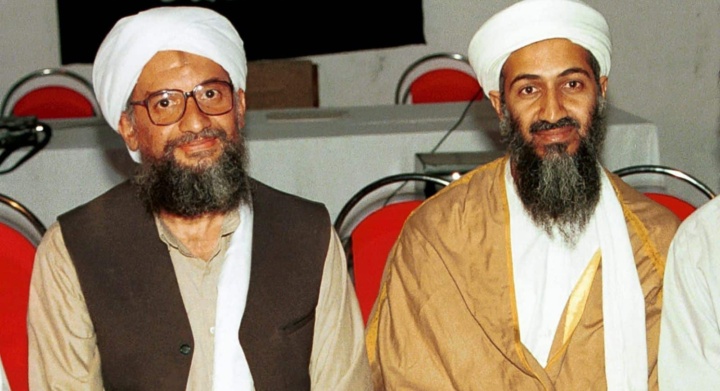
In 1998, Osama Bin Laden established al-Qaeda out of a network of veterans from the American-backed Afghan insurgency against the Soviet Union.[1] At this time, the main objective of al-Qaeda was to support Islamist causes in conflicts throughout the world. Following the 1991 Gulf War, due to the Saudi decision to host American troops, the United States was made al-Qaeda’s number one target.[2] Shortly later, Osama Bin Laden would leave his native Saudi Arabia to Sudan and then to Afghanistan where Taliban leadership offered refuge. Prior to September 11, al-Qaeda carried out the 1998 bombings of U.S. embassies in Kenya and Tanzania, and the 2000 attack on the USS Cole. In 1999, the American government designated al-Qaeda as a foreign terrorist organization.3

In response to the 2003 American invasion of Iraq, Jordanian national Abu Musab al-Zarqawi founded Tawhid wal Jihad (which translates to “Monotheism and Holy War”).[3] Zarqawi later pledged allegiance to al-Qaeda and renamed his organization to al-Qaeda in Iraq.[4] Zarqawi wished to establish a civil war between Sunni Muslims and Shia Muslims, and ultimately establish a caliphate.[5] Al-Qaeda is Sunni however considers Shia Muslims to be “associates”. In contrast, Zarqawi was much more extreme in his views and called for the killing of Shias. In fact, al-Qaeda considered Zarqawi to be too radical and as such, their relations would be strained. 

In 2006, Zarqawi was killed in a U.S. airstrike. Abu Ayyub al-Masri would take over and rename the organization the Islamic State of Iraq. Seven years later, in 2013, Abu Bakr al-Baghdadi expanded operations into Syria and the organization adopted its current name of the Islamic State of Iraq and Syria, ISIS.[6] 

Jihadist groups have long used media as a tool of asymmetric warfare in order to project power, spread ideology, and influence global audiences without conventional military strength. For groups like Al-Qaeda and ISIS, media plays a key role in recruitment, legitimizing actions, deterring enemies, and controlling the narrative. While both organizations share ideological roots, their media strategies differ sharply. These differences reveal contrasting goals, structures, and generational outlooks. ISIS’s media model, in particular, marks a major shift where digital propaganda is turned into a core weapon.       

II. Al-Qaeda’s Media Strategy

Ayman al-Zawahari, Osama Bin Laden’s successor, once stated that, “We [al-Qaeda] are in a battle, and more than half of this battle is taking place in the battlefield of the media. And that we are in a media battle in a race for the hearts and minds of our people”.[7]  However, Al-Qaeda’s media strategy was not existent at the time of the organization’s creation. Once such a strategy became implemented, the focus was on long form and ideologically dense messaging. In the first phase (1988-2000) of al-Qaeda’s media strategy, the organization was not overtly active in distributing literature. Instead, the majority of efforts were centered around the personality-cult of Osama Bin Laden and little was done in order to reach out to new members.[8] As such, predominantly those who already sympathized with the organization’s cause viewed their material. It was not until Bin Laden realized the value in international television interviews that he was able to further promote himself and the organization’s ideals.

In the second phase (September 11, 2001 to mid 2000s), al-Qaeda was able to capitalize on media exposure from the September 11 attacks and international search for Bin Laden to promote their cause. Moreover, the group gained popularity and search topics on the internet increased. This could be indicative of radicalization as Inspire, an al-Qaeda affiliated magazine, gained traction online as well.[9] This period was also marked by growing decentralization where propaganda began to feature senior members from all over the world in order to maintain high interest and international al-Qaeda cells as well as individual militants were highlighted.  Finally, in the third phase (late 2000s to present), the organization has begun to rely more exclusively on the internet and social media in order to distribute propaganda with the intention to mobilize Western Muslims against their governments.[10] Due to a greater amount of media being released by all jihadist groups, al-Qaeda began to receive less media attention. In order to counteract this trend, the organization has relied on tech savvy young adults to disperse propaganda. This has resulted in al-Qaeda affiliated media to become more influential in the eyes of a youth.[11]

Yet despite efforts to modernize, al-Qaeda’s communication strategy remained rooted in ideological depth rather than visual immediacy. Its top-down structure and reliance on traditional formats limited its ability to compete in an increasingly intense digital environment. It was in this evolving media landscape that ISIS emerged, an organization that would not only inherit al-Qaeda’s ideological framework but also revolutionize how terrorism communicates and recruits through the power of social media and cinematic production.

III. The Islamic State of Iraq and Syria’s Media Strategy

Building upon, but ultimately surpassing, al-Qaeda’s early propaganda model, ISIS developed a media machine unlike any previous terrorist organization. For instance, the organization operates two divisions that are dedicated to propaganda: Al Hayat Media, focused on recruiting and painting an idyllic future, and Mu’assassat al-Furqan which focuses on spreading fear.[12] ISIS places special emphasis on its propaganda workers which is reflected in their monthly income being higher than those of a traditional soldier.[13]

Additionally, several Westerners rank towards the top of ISIS’s propaganda machine. Investigations indicate that an American and a German have played key roles in Al-Hayat Media.15 With this foreign talent, ISIS has much more media capability than al-Qaeda as they distribute high-quality and length propaganda movies. 

There are three major areas of innovation regarding ISIS’s media strategy: global dissemination of threat, decentralized messaging, and the development of new software.[14]  Social media allows sympathizers to disseminate their propaganda much more efficiently. At al-Qaeda’s peak, their videos could only air through Al-Jazeera or very specific websites. Today, ISIS sympathizers utilize social media where, for example, they can take over threads on unrelated topics. A strong case study can be seen in the 2014 World Cup where ISIS users tagged their tweets with “#brazil_2014” which gave them access to a network of users that were only browsing for soccer updates. 

With their decentralized structure and many sympathizers living in the West, there are as many as 3,000 users that can produce nearly 100,000 tweets each day.17 Due to this volume, it is incredibly difficult for governments to keep up. This approach differs from terror groups of the past who needed to rely on rigid structures to distribute propaganda. In contrast, due to technological advancement, ISIS is able to create a flexible system that is consistently being updated. 

Regarding software, ISIS developed an app called “Dawn of Glad Tidings” which allows users to post tweets without any manual input. Propaganda officials design the tweets and the app coordinates them based on a timing mechanism in order to avoid detection by algorithms.[15] Experts state that this app was responsible for up to almost 40,000 tweets in one day as ISIS fought in Mosul.[16] With the creation of this app, ISIS continued to produce content online even while sympathizers were away from their phones.

IV. Comparative Analysis

The evolution from al-Qaeda’s media strategy to that of the Islamic State marks a significant transformation in jihadist communication. Both organizations recognize media as an indispensable weapon of war, yet they deploy it in fundamentally different ways. As stated before, al-Qaeda’s media operations emerged in an earlier era defined by limited access to mass communication, where propaganda was largely ideologically dense and leader-centric.

Al-Qaeda’s strategy centered on persuasion through authority. Its messaging relied on theological legitimacy, charismatic leadership, and appeals to collective grievance. 

ISIS, by contrast, was born into a fully globalized, networked environment and therefore treated media not as a supporting instrument but as its own battlefield. Prioritizing accessibility and emotional immediacy over ideological depth, ISIS used high-definition video, social media platforms, and interactive apps in order to invite participation and immersion. This allows sympathizers to become both consumers and ultimately producers of propaganda.

The generational divide between the two organizations is equally significant. Al-Qaeda’s content reflected a 20th-century communication style through lengthy lectures, manifestos, and statements designed for an audience of already committed followers. ISIS, however, tailored its messaging to a younger, tech savvy demographic already accustomed to visual media and instant engagement. The result was a form of propaganda that resembled entertainment as much as extremist ideology. This shift in communication and media indicates a turning point in jihadist media strategy, demonstrating how applying technological advancement to propaganda can turn a message into a broader movement.

V. From Digital Propaganda to Artificial Intelligence

As illustrated, al-Qaeda and ISIS’s media strategy differ as ISIS was able to capitalize on the technological advancement of the time. ISIS’s success online exposes serious challenges in countering extremist propaganda. Decentralized content moves much faster than traditional information operations can keep up, making disruption difficult. The group’s digital strategy shows how insurgents can dominate the narrative without necessarily holding any physical territory. This adaptability underscores how effectively extremist groups leverage emerging technologies to advance their agendas. 

As the digital landscape continues to evolve, artificial intelligence (AI) has emerged as the next frontier, with terrorist organizations increasingly seeking to exploit its growing capabilities for propaganda, recruitment, and influence operations. As generative AI has been making tremendous progress, terrorist organizations are increasingly interested in exploiting and using it to their advantage.

Specifically, generative AI uses machine learning in order to generate new content, text, images, audio, and multifunctional simulations.[17] The difference between generative AI and other forms of AI is that the former is able to develop new outputs instead of just predicting and categorizing.[18] Examples of generative AI can be seen in ChatGPT, Google Gemini, Bing Image Creator, Microsoft VALL-E, and various other programs.

The use of artificial intelligence in radicalization and extremism is already taking place as groups such as al-Qaeda, Hamas, Hezbollah, and ISIS are already employing these tools. In the United Kingdom, a nineteen year old was arrested as he plotted to assassinate Queen Elizabeth II. Investigations later found that he exchanged approximately 5,000 messages with an AI chatbot during his radicalization.[19] 

In an article published by the Combating Terrorism Center at West Point, potential uses of AI by terrorist organizations include propaganda, interactive recruitment, automated attacks, social media exploitation, and cyber attacks.[20] Furthermore, the use of such tools by terrorist organizations fall into five categories:

  1. Polarizing or emotional content
  2. Disinformation or misinformation 
  3. Recruitment 
  4. Tactical learning 
  5. Attack planning.24

Real world examples can be seen through ISIS and Hamas. Firstly, ISIS has applied generative AI to translating propaganda messaging into languages such as Arabic, English, and Indonesian.[21]

Regarding Hamas, the terrorist organization has used generative AI in order to leak altered images with hopes of instigating more violence and spreading misinformation about what is happening in Gaza. Reports indicate that Hamas has manipulated already tragic images of injured young people and babies in order to create more chaos and disturbing content.[22]

Additionally, generative AI has been used in order to spread images and videos of Israeli soldiers wearing diapers with the aim of undermining the Israel Defense Forces, IDF, and spreading misinformation.[23]

However, artificial intelligence also provides new interesting methods in counterterrorism. Firstly, it could be used to counter propaganda and in deradicalization. AI tools could automatically detect and remove extremist content from social platforms thus curbing the spread of terrorist propaganda. AI could also support deradicalization programs by identifying at-risk individuals and analyzing their online behavior. 

Furthermore, through predictive analytics- analyzing patterns in historical data, social media presences, and other intelligence sources- AI may possess the capability to predict potential terrorist attacks.[24] 

VI.  The Reconfiguration of Counterterrorism in Digital Spaces

In today’s world, as extremist propaganda has migrated onto digital platforms, the responsibility for counterterrorism has increasingly become shared between governments and private enterprises. This shift has elevated technology companies into necessary security actors, while states are compelled to adapt to a fragmented and contested digital environment.

Platforms such as Meta, Google, and X (formerly Twitter) now function as intermediaries in contemporary counterterrorism and counterradicalization efforts. By hosting, amplifying, or suppressing content, they shape the informational conditions under which radicalization and mobilization occur. Content moderation on these platforms relies primarily on automated governance tools, including hashtag technologies, image recognition, and natural language processing models designed to detect extremist material.[25] Compared to earlier approaches, these systems are significantly more proactive and have reduced large-scale dissemination. However, in doing so, platforms have increasingly assumed the role of de facto security providers, concentrating substantial counterterrorism responsibility within non-governmental entities.             

Governments, in turn, have responded by integrating digital tools into their counterterrorism practices. Open-source intelligence (OSINT) methods, such as social media analysis, now complement more traditional intelligence practices, enabling extremist networks and potential radicalization to be monitored more accurately and in real time. At the same time, states have expanded strategic communication efforts aimed at challenging extremist narratives.

Strategically, counter-messaging encompasses a spectrum of approaches, ranging from disruption-oriented efforts that seek to delegitimize extremist claims to persuasion-oriented initiatives that promote alternative identities and social pathways. The latter frequently relies on non-state messengers, such as former extremists or community leaders, to enhance credibility and reach.

Despite these efforts, counter-narratives face significant structural constraints. Extremist propaganda often gains traction through emotional intensity, while state-produced messaging frequently lacks credibility in contexts marked by institutional distrust. As a result, counter-messaging remains disadvantaged within digital attention economies where emotional affect is often valued more highly than factual accuracy.

Taken together, these dynamics suggest that it is unrealistic for digital counterterrorism to eliminate extremist content entirely. Instead, its primary function is to contest the visibility, legitimacy, and narrative power of such content. Authority in the digital space is fragmented among social media platforms, states, and non-state actors, resulting in the emergence of a decentralized model of security governance.

VII. Conclusion

The progression from al-Qaeda’s traditional propaganda to ISIS’s digital media empire highlights how extremist groups rapidly adapt to technological change. While al-Qaeda relied on centralized, ideologically dense messaging, ISIS transformed media into a decentralized, participatory battlefield that redefined online radicalization.

As artificial intelligence becomes the newest technological frontier, terrorist organizations are already beginning to exploit its capabilities for propaganda, recruitment, and disinformation. Yet, AI also offers valuable tools for counterterrorism such as enabling faster detection, deradicalization efforts, and predictive analysis.

The evolution from al-Qaeda to ISIS to AI-driven extremism underscores that future conflicts will be fought not only on physical ground but also across digital and algorithmic spaces. Counterterrorism strategies must evolve accordingly to meet the speed and complexity of this new information war.

Bibliography

Earnhardt, Rebecca L. “Al-Qaeda’s Media Strategy: Internet Self- Radicalization and

Counter-Radicalization Policies.” Virginia Commonwealth University, 2014.

https://scholarscompass.vcu.edu/cgi/viewcontent.cgi?article=1001&context=wilder_pubs

.

Gerstel, Dylan. “Isis and Innovative Propaganda.” Swarthmore College. Accessed July 17, 2025.

https://works.swarthmore.edu/cgi/viewcontent.cgi?article=1004&context=swarthmoreirjo urnal.

Gongane, Vaishali U, Mousami  V Munot, and Alwin  D Anuse. “Detection and Moderation of Detrimental Content on Social Media Platforms: Current Status and Future Directions.” Soc Netw Anal Min, 2022. 

Hassan, Hassan. “The True Origins of Isis.” The Atlantic, January 7, 2019.

https://www.theatlantic.com/ideas/archive/2018/11/isis-origins-anbari-zarqawi/577030/.

Jetter, Michael. “The Inadvertent Consequences of Al-Qaeda News Coverage.” European

Economic Review, August 16, 2019. https://www.sciencedirect.com/science/article/abs/pii/S0014292119301448.

Mathur, Priyank, Clara Broekaert, and Colin P. Clarke. “The Radicalization (and Counter-Radicalization) Potential of Artificial Intelligence.” ICCT, May 1, 2024.

https://icct.nl/publication/radicalization-and-counter-radicalization-potential-artificial-inte lligence. 

Nelu, Clarisa. “Exploitation of Generative AI by Terrorist Groups.” ICCT, June 10, 2024. https://icct.nl/publication/exploitation-generative-ai-terrorist-groups. 

Saltman, Erin Marie, and Charlie Winter. “Islamic State: The Changing Face of Modern

Jihadism,” 2014.

Siegel, Daniel. “AI Jihad: Deciphering Hamas, al-Qaeda and Islamic State’s Generative AI

Digital Arsenal.” GNET, November 14, 2024. https://gnet-research.org/2024/02/19/ai-jihad-deciphering-hamas-al-qaeda-and-islamic-sta tes-generative-ai-digital-arsenal/. 

Thomas, Clayton. “Al Qaeda: Background, Current Status, and U.S. Policy .” Congressional

Research Service, May 6, 2024. https://www.congress.gov/crs-product/IF11854.

Weimann, Gabriel, Alexander T. Pack, Rachel Sulciner, Joelle Scheinin, Gal Rapaport, and David Diaz. “Generating Terror: The Risks of Generative AI Exploitation.” Combating

Terrorism Center at West Point, January 19, 2024. https://ctc.westpoint.edu/generating-terror-the-risks-of-generative-ai-exploitation/. 

Weinman, Edward. “Inside Isis.” Connecticut College. Accessed July 16, 2025.

https://www.conncoll.edu/news/cc-magazine/past-issues/2016-issues/fall-2016/inside-isis

/. 


[1] Clayton Thomas, “Al Qaeda: Background, Current Status, and U.S. Policy ,” Congressional Research Service, May 6, 2024, https://www.congress.gov/crs-product/IF11854.

[2] Ibid. 3 Ibid.

[3] Edward Weinman, “Inside Isis,” Connecticut College, accessed July 16, 2025, https://www.conncoll.edu/news/cc-magazine/past-issues/2016-issues/fall-2016/inside-isis/.

[4] Ibid.

[5] Hassan Hassan, “The True Origins of Isis,” The Atlantic, January 7, 2019, https://www.theatlantic.com/ideas/archive/2018/11/isis-origins-anbari-zarqawi/577030/.

[6] Edward Weinman, “Inside Isis,” Connecticut College, accessed July 16, 2025, https://www.conncoll.edu/news/cc-magazine/past-issues/2016-issues/fall-2016/inside-isis/.

[7] Rebecca L Earnhardt, “Al-Qaeda’s Media Strategy: Internet Self- Radicalization and Counter-Radicalization Policies,” Virginia Commonwealth University, 2014, https://scholarscompass.vcu.edu/cgi/viewcontent.cgi?article=1001&context=wilder_pubs.

[8] Ibid.

[9] Michael Jetter, “The Inadvertent Consequences of Al-Qaeda News Coverage,” European Economic Review, August 16, 2019, https://www.sciencedirect.com/science/article/abs/pii/S0014292119301448.

[10] Rebecca L Earnhardt, “Al-Qaeda’s Media Strategy: Internet Self- Radicalization and Counter-Radicalization Policies,” Virginia Commonwealth University, 2014, https://scholarscompass.vcu.edu/cgi/viewcontent.cgi?article=1001&context=wilder_pubs.

[11] Ibid.

[12] Dylan Gerstel, “Isis and Innovative Propaganda,” Swarthmore College, accessed July 17, 2025, https://works.swarthmore.edu/cgi/viewcontent.cgi?article=1004&context=swarthmoreirjournal.

[13] Ibid. 15 Ibid.

[14] Erin Marie Saltman and Charlie Winter, “Islamic State: The Changing Face of Modern Jihadism,” 2014. 17 Dylan Gerstel, “Isis and Innovative Propaganda,” Swarthmore College, accessed July 17, 2025, https://works.swarthmore.edu/cgi/viewcontent.cgi?article=1004&context=swarthmoreirjournal.

[15] Ibid.

[16] Ibid.

[17] Clarisa Nelu, “Exploitation of Generative AI by Terrorist Groups,” ICCT, June 10, 2024, https://icct.nl/publication/exploitation-generative-ai-terrorist-groups.

[18] Ibid.

[19] Priyank Mathur, Clara Broekaert, and Colin P. Clarke, “The Radicalization (and Counter-Radicalization) Potential of Artificial Intelligence,” ICCT, May 1, 2024, https://icct.nl/publication/radicalization-and-counter-radicalization-potential-artificial-intelligence.

[20] Gabriel Weimann et al., “Generating Terror: The Risks of Generative AI Exploitation,” Combating Terrorism Center at West Point, January 19, 2024, https://ctc.westpoint.edu/generating-terror-the-risks-of-generative-ai-exploitation/. 24 Ibid.

[21] Clarisa Nelu, “Exploitation of Generative AI by Terrorist Groups,” ICCT, June 10, 2024, https://icct.nl/publication/exploitation-generative-ai-terrorist-groups.

[22] Daniel Siegel, “AI Jihad: Deciphering Hamas, al-Qaeda and Islamic State’s Generative AI Digital Arsenal,” GNET, November 14, 2024, https://gnet-research.org/2024/02/19/ai-jihad-deciphering-hamas-al-qaeda-and-islamic-states-generative-ai-digital-arsenal/.

[23] Ibid.

[24] Clarisa Nelu, “Exploitation of Generative AI by Terrorist Groups,” ICCT, June 10, 2024, https://icct.nl/publication/exploitation-generative-ai-terrorist-groups.

[25] Vaishali U Gongane, Mousami  V Munot, and Alwin  D Anuse, “Detection and Moderation of Detrimental Content on Social Media Platforms: Current Status and Future Directions,” Soc Netw Anal Min, 2022.

Regime Change? What You Need to Know About Iran

By Izzy Knaus – Rise to Peace Fellow

The eruption of open conflict in Operation Epic Fury between Iran, the United States, and Israel in early 2026 marks the definitive end of years of covert confrontation and proxy skirmishing. The joint campaign–designed to cripple Iran’s nuclear and military capabilities–has shifted the regional security order toward direct state-on-state warfare not seen in decades. With the death of Supreme Leader Ayatollah Ali Khamenei and the disarray of his succession council, Tehran faces its gravest internal instability since 1979.

The war has transformed Iran from a shadow orchestrator of proxy forces into the central battlefield of Middle Eastern power politics. Competing factions within the Islamic Republic—reformists, hardline clerics, and the Revolutionary Guard—are struggling to preserve their influence under relentless bombardment and economic isolation. The question of succession is rapidly blending into a struggle for regime survival.

The conflict’s secondary effects are already global. Energy markets remain volatile as attacks, blockades, and tanker disruptions push oil and gas prices higher, testing European and Asian economies. Maritime insecurity in the Strait of Hormuz has resurrected old debates about global energy dependence and naval projection. Meanwhile, diplomatic fractures have widened within NATO and the EU–some states backing U.S. force projection, others condemning unilateral escalation.

Regionally, the war’s geography now spans Iran, Iraq, Lebanon, and the Gulf–blurring lines between fronts and proxies. Israeli offensives along the Lebanese border, combined with Iranian missile and drone strikes across the Middle East, herald a return to full-spectrum warfare that could redraw red lines across the entire region. China’s mediation attempts and Turkey’s NATO entanglement underscore how rapidly this conflict could globalize.

In effect, what began as a U.S.-Israeli operation to preempt Iran’s nuclear capability is evolving into a contest over the post-Iran regional order: whether the Islamic Republic’s collapse produces fragmentation, a military-led continuity regime, or an unpredictable revolutionary outcome. However the battlefield map shifts, the strategic reality is now set–Iran is not just a player, but the epicenter of a regional system in violent transition.

Proxies and the “Axis of Resistance” in Active Combat

Iran’s “Axis of Resistance” functions as a decentralized, Tehran-orchestrated network designed to exert pressure on adversaries through synchronized proxy actions, rather than direct confrontation. This structure links disparate groups—Hamas in Gaza, Hezbollah in Lebanon, Iraqi Shiite militias, and Yemen’s Houthis—into a cohesive strategy that amplifies Iran’s reach while minimizing risks to its core territory.
Historically, Hamas’s October 7, 2023, attack initiated a multi-front escalation, with Hezbollah’s rocket barrages from Lebanon, Iraqi militia drone strikes on U.S. bases, and Houthi interdictions of Red Sea shipping forming interconnected pressure points. These operations share Iranian-supplied weapons, training, and command signals, creating a “ring of fire” around Israel and U.S. interests that forces resource diversion and diplomatic strain.

Following U.S.-Israeli strikes on Iran in late February 2026, Tehran most likely issued direct activation orders to its proxies, transitioning from opportunistic harassment to coordinated retaliation. Houthi attacks on U.S.-aligned shipping in the Red Sea and Gulf of Aden intensified immediately, using Iranian ballistic missiles and drones to target tankers and naval assets, in lockstep with Hezbollah ground incursions in Lebanon and Iraqi militia assaults on Gulf bases.

This synchronization reveals the Axis’s true nature: not independent actors, but extensions of IRGC-Quds Force operations, calibrated to exploit geographic depth and impose asymmetric costs. Even as proxies face degradation–Hamas decimated in Gaza, Hezbollah strained by Israeli offensives–the network’s resilience lies in its redundancy, ensuring persistent threats to maritime trade, energy flows, and regional stability.

The Axis endures as a model of hybrid warfare, blending militia swarms with missile/drone barrages to contest superior conventional forces. Direct hits on Iran have not dismantled it; instead, they’ve spurred adaptive escalation, with proxies absorbing losses to maintain pressure on Israel, the U.S., and Gulf states. This dynamic locks the conflict into a protracted, multi-domain struggle, where proxy activation remains Tehran’s primary tool for survival and retaliation.
Regime Survival vs. Regime Change

The ongoing war has crystallized into an existential contest for Iran’s leadership, pitting the theocratic regime’s desperate bid for survival against explicit U.S. and Israeli objectives to destabilize or topple it. After decapitation strikes and relentless targeting of command structures, Tehran’s rulers face not just external bombardment but internal repression on a massive scale–thousands arrested, internet blackouts enforced, and dissent crushed to prevent uprisings amid economic collapse and daily casualties.

U.S. President Trump and Israeli leaders have escalated rhetoric with overt appeals to the Iranian people, urging them to “rise up against the oppressors” and promising support for a post-regime future. This marks a doctrinal shift from containment to regime change, framing the conflict as
liberation from 47 years of clerical rule, with military operations now prioritizing disruption of IRGC loyalty and economic lifelines.

Yet regime failure carries profound dangers: a fragmented power vacuum could spawn warlordism, ethnic separatism in Baluchistan or Kurdistan, and uncontrolled nuclear remnants. Iran’s proxy network–Hezbollah, Houthis, Iraqi militias–might splinter without central funding, triggering uncontrolled adventurism or realignments with Russia and China. This precarious dynamic underscores the war’s high stakes: victory for one side risks chaos for the region.

Scenarios: How This War Ends

Three endgames shape the Iran conflict’s trajectory, each balancing military outcomes, internal dynamics, and global stakes, with direct bearing on terrorism, regional power balances, and pathways to sustainable peace in line with long-term peacebuilding priorities.

Scenario 1: Negotiated De-escalation

Tehran’s temporary leadership, battered by strikes and economic strangulation, signals readiness for talks after 4-6 weeks via backchannels in Qatar or Oman, offering verifiable nuclear dismantlement, IRGC proxy drawdowns in Yemen and Iraq, and ballistic missile caps for partial sanctions relief and Gulf-funded reconstruction. U.S.-Israeli operations wind down under UN monitoring, stabilizing oil flows. Terrorism ebbs as cash-strapped Hezbollah and Houthis scale back, enabling a Gulf-Arab détente that sidelines Iranian influence. Regionally, a humbled regime reinforces deterrence without upheaval, though hardliner resurgence risks renewed proxy games. For peacebuilding, this opens modest space for civil society and women’s rights reforms, fostering a pragmatic Iran less export-oriented in its ideology, if external aid prioritizes inclusive governance over vengeance.

Scenario 2: Messy Regime Change

Sustained decapitation, urban unrest, and IRGC defections precipitate collapse within 2-4 months, echoing 1979’s revolutionary fervor or a praetorian coup, birthing a fragmented transition council amid ethnic revolts in Kurdistan, Baluchistan, and Khuzestan. External powers–U.S. airlifts to moderates, Saudi backing for Sunnis–fill the vacuum, but proxy implosion unleashes rogue Houthi salvos and Iraqi militia terror cells targeting Gulf targets. Terrorism spikes short-term, fracturing the regional order into proxy-free zones (Gulf, Levant) versus chaos belts, with Turkey and Pakistan eyeing border gains. Peace prospects hinge on rapid federation and diaspora return: a decentralized Iran could demilitarize, curb radical export, and integrate economically, aligning with Rise to Peace ideals through empowered local institutions—yet state failure risks a Somalia-style quagmire.

Scenario 3: Prolonged Attrition War

Iran’s asymmetric depth–missile stockpiles, proxy rings, Russian S-400s, Chinese drones–prolongs fighting into 2027+, with Hormuz chokepoints, Red Sea blockades, and Hezbollah attrition grinding U.S. resolve amid domestic war fatigue. Proxy escalation amplifies terrorism via drone swarms on European refineries and militia raids on Jordan, eroding U.S.-centric order as NATO splinters and BRICS exploits energy chaos. Regionally, stalemate entrenches militarized frontiers, emboldening authoritarian playbooks globally. Post-war Iran, if any, emerges as a fortress state under military rule, isolated and vengeful, with peacebuilding near-impossible without exhaustive Marshall Plan-scale aid; sustained diplomacy must preempt this by bolstering moderates early, averting a cycle of enmity that poisons generations.

Rise to Peace’s Questions for the U.S. Intelligence Community

  • How should the U.S. and its allies prioritize between eliminating Iran’s remaining nuclear materials and mapping what is left of its advanced missile and drone capabilities after Operation Epic Fury?
  • What safeguards are needed to prevent unsecured or partially destroyed nuclear infrastructure from becoming a proliferation risk if the regime collapses or fractures?
    Civilian protection and urban unrest
  • As mass protests, mourning gatherings, and street mobilization surge after Khamenei’s death, what tools can the U.S. intelligence community use to track civilian movements in real time without enabling or causing mass casualty events?
  • How should civilian-protection imperatives shape targeting decisions when Iran’s security forces deliberately embed among protestors and dense urban populations?
    IRGC and proxy networks
  • With the IRGC and the “Axis of Resistance” now in open, synchronized combat, what kinds of network mapping (supply chains, financial flows, command hierarchies) are most urgent to rapidly degrade Iran’s capacity to wage a regional campaign?
  • How can U.S. and partner intelligence best distinguish between Iran-directed proxy operations and more autonomous militia behavior as Hezbollah, Hamas, Iraqi militias, and the Houthis absorb heavy losses?
    Leadership succession and regime futures
  • In an unstable succession environment after Khamenei, how should analysts prioritize profiling potential future Supreme Leaders and IRGC power brokers, and what indicators would signal a shift toward either hardline consolidation or messy regime change?
  • What are the most responsible ways for outside powers to influence Iran’s leadership trajectory without triggering a wider civil war or state collapse?
    Great-power and regional involvement
  • Given reported Russian intelligence and materiel support to Tehran, how should U.S. planners weigh the risk of escalation with Moscow against the need to cut off Iran’s external lifelines?
  • How might Saudi Arabia, the UAE, Turkey, and other regional actors recalibrate their strategies if the conflict evolves into a prolonged war of attrition rather than quick regime change or negotiated de‑escalation?
    U.S.-Israel coordination and new security architectures
  • What forms of intelligence sharing with Israel are most likely to reduce civilian harm in Lebanon and Iran while still neutralizing Hezbollah and other Iranian-backed forces?
  • Could emerging partnerships with non-state or sub-state actors such as the Kurdistan Region form the backbone of a new regional security architecture after the Iran war, and what long-term risks would such alignments carry?
    Strategic endgames and peacebuilding
  • Across the three endgames—negotiated de‑escalation, messy regime change, or prolonged attrition—which outcome would best align with long-term goals of constraining proxy violence, stabilizing governance, and protecting civilians, and why?
  • What specific questions should the U.S. intelligence community be asking now to ensure that today’s targeting and alliance choices do not foreclose tomorrow’s opportunities for peace and regional reconciliation?

    Iran is not just another crisis hotspot but the hinge of a wider systemic transition in the Middle East, where choices made in the coming months will reverberate across energy markets, alliance structures, and global norms on the use of force. Whether the conflict ends in negotiated de‑escalation, messy regime change, or prolonged attrition, the stakes extend far beyond Tehran: stabilizing postwar governance, constraining proxy violence, and protecting civilians will determine if this war yields a more secure regional order or locks the world into a new era of chronic instability.

Gina Bennett: The Woman Who Saw Bin Laden Coming

By Izzy Knaus – Rise to Peace Fellow

What better day to kickstart our Women, Peace, and Security Monthly Spotlight Series here at Rise to Peace than International Women’s Day! At Rise to Peace, we are proud to dedicate this initiative to honoring women who have shaped–and continue to shape–the global security landscape. This first feature, The Analyst Who Saw Bin Laden Coming, highlights one trailblazing counterterrorism professional who has broken barriers and led efforts to counter violent extremism across the world. Her story reminds us that inclusive security is not only a matter of justice but also a matter of effectiveness: when women lead, peace and resilience follow.

Meet Gina Bennett, retired CIA analyst of almost 35 years who spent her entire career in the counterterrorism mission. Within days of graduating from the University of Virginia with a degree in economics and foreign affairs, she had hit the ground running with a summer externship at the State Department in Washington DC. Over the course of her summer, the woman who ran the office took notice of Bennett and her work ethic, sat her down, and said, “Gina, you need to get a job in intelligence. You have more potential than this.” So, Bennett applied for a 24/7 terrorism watch officer position in the State Department’s Bureau of Intelligence and Research. This is where she realized: once you see inside the counterterrorism mission, “there’s no going back”. 

 Seeing the Threat Before Others: Bin Laden and the CT Mission

When Bennett first stepped onto the 24/7 terrorism watch floor at the State Department’s Bureau of Intelligence and Research (INR), she entered a world in flux: the Cold War was ending, foreign fighters were dispersing from Afghanistan, and the terrorist threat was beginning to morph into something transnational and harder to define. From that vantage point, she began tracking a relatively obscure financier referred to as “Abu Abdullah,” who was quietly channeling money, supplies, and manpower to a growing network of militant jihadist groups in Afghanistan and Pakistan.

By August 1993, Bennett had pulled these threads together into a now‑famous INR memo, “The Wandering Mujahidin: Armed and Dangerous.” In it, she warned that the same support networks that had “funneled money, supplies, and manpower to supplement the Afghan mujahidin” were now “contributing experienced fighters to militant Islamic groups worldwide,” and that these “wandering mujahidin” could surprise the United States with violence far from traditional battlefields. At a time when Osama bin Laden’s name had barely appeared in Western media, Bennett explicitly flagged him–under his own name–as a particularly significant private donor whose religious zeal and financial largesse made him central to this emerging threat.

Her early warning did not come from a single “smoking gun” but from methodical pattern recognition across regions as different and distinct as Chechnya, Kashmir, the Philippines, and North Africa. From her desk in Foggy Bottom, she watched veterans of the anti‑Soviet jihad reappear in conflict after conflict, and recognized the contours of a global movement rather than isolated local insurgencies. In the mid‑1990s, she moved to the CIA’s Counterterrorism Center, bringing with her this broad survey understanding of terrorism and geopolitics that would underpin decades of work in the counterterrorism mission and later contributions to high‑level assessments on global terrorism trends. That combination of strategic perspective and granular pattern‑tracking would become a hallmark of her career.

Rethinking Security in a Changing Terrorism Landscape

Gina Bennett’s nearly 35 years in counterterrorism have led her to reject the comforting fiction that peace simply arrives when war or threats recede. Instead, she argues that “peace is not the absence of war” and “security is not the absence of threats,” but the result of “extremely hard work, constant, persistent, never‑ending work” to sustain democratic institutions, human dignity, and social resilience. In her view, a country can be physically “safe” under many forms of government–even authoritarian or theocratic–but it is not truly secure if its core ideals, rights, and civic life are hollowed out, a perspective that aligns with her long-standing call to expand U.S. security thinking beyond a narrow focus on attacks to include the health of democracy itself.

This redefinition of security is inseparable from the evolution of the terrorism landscape she has witnessed from the late Cold War to today. Bennett began her career amid state-centered, relatively predictable threats, then watched power diffuse to non‑state actors like al‑Qaeda and finally into a hybrid era where state and non‑state networks blend, often anonymously and over long time horizons. In that context, the familiar “mowing the grass” metaphor–striking terrorist groups as they rebuild–captures only a fraction of the challenge: neutralizing visible cells does not address the deeper social, psychological, and institutional vulnerabilities that allow threats to regenerate.

Bennett contends that traditional, male‑dominated security thinking has privileged the visible, public sphere of force and deterrence while discounting the less visible “private sphere” work–care, cohesion, community resilience–that actually underpins long‑term security. She sees women’s perspectives as essential not merely for representation but for expanding what counts as security knowledge, bringing in human security concerns like freedom from fear, want, and indignity and highlighting how peace is built in homes, schools, and communities as much as in command centers. In practice, this has meant elevating cognitive styles often associated with women–pattern recognition, sensitivity to anomalies, and attention to nonverbal and emotional cues–which she argues are evolutionarily honed skills well suited to detecting emergent, ambiguous threats that cannot simply be “nuked” because their actors or contours are not yet fully known.

Across federal counterterrorism work, Bennett has seen a gradual but meaningful shift toward valuing this broader, more inclusive understanding of security and analysis. Agencies increasingly recognize that anticipating complex, networked threats requires diverse minds, humility, and a willingness to question assumptions, not just kinetic capacity or technical collection. For Bennett, this evolution brings national security closer to how families actually function—drawing on multiple ways of identifying and solving problems—and it reinforces her core message to the next generation of women in intelligence: your skepticism, subtlety, and so‑called “soft” skills are in fact hard‑won evolutionary assets, and they are indispensable to the never‑ending work of building and protecting peace.

Gender, Evolutionary Skills, and Why Women See Threats Differently

From Hunter‑Gatherers to Today’s Intel World

Bennett entered a counterterrorism field expecting male dominance in personnel but was struck by its deeper imprint on thinking itself: an assumption that security means neutralizing external threats, ignoring the internal work of sustaining communities. She traces this to the dawn of settled civilization, when human security was divided into public “hunter” domains (politics, defense) and private “gatherer” ones (care, cohesion), with security discourse centering only the former. Traditional theories, written mostly by men unfamiliar with gathering and caretaking, thus overlook how these roles have secured human thriving for millennia–a gap the Women, Peace, and Security agenda seeks to close.

Evolutionary and Neurobiological Skills

Drawing on neurobiologist Louann Brizendine’s work in The Female Brain, Bennett argues that gendered brain differences reflect evolutionary pressures from distinct threats and roles. Women’s larger frontal lobes and hippocampi enable superior pattern recognition, memory, nonverbal cue detection, and anomaly spotting–skills honed over millions of years for survival in childrearing and community contexts. “Not every threat shows up like a missile,” she notes; men excel at tracking overt motion, but women can more clearly perceive the “fuzzy little dots” in subtle, emerging pictures. 

In counterterrorism, these “evolutionary skills” prove vital for identifying psychological vulnerabilities, hidden networks, and low‑signal threats like those in today’s hybrid landscape. Bennett credits them for her own early bin Laden warnings and observes that intelligence has evolved to better appreciate such capabilities, though early on women’s insights were often dismissed as novel or unproven.

Kahneman, Cognitive Bias, and “Imposter Syndrome”

Imposter syndrome plagues many women in intelligence, but Bennett reframes it as a symptom of a deeper issue: arrogance, particularly the male tendency toward overconfidence. In a conversation with Nobel economist Daniel Kahneman, author of Thinking, Fast and Slow, she probed whether men and women face different cognitive biases. Kahneman acknowledged he hadn’t studied gender explicitly but rejected simplistic views of women’s “intuitive” decision-making, noting instead that women continually question their own thinking rather than locking into premature certainty–a trait that makes them superior in fields like intelligence analysis.

This self‑questioning, often mislabeled as indecision, is actually rigorous critical thinking that guards against bias and drives innovation. For young counterterrorism professionals, Bennett’s lesson is clear: embrace doubt as a superpower, especially in your first 5-10 years when fresh questioning challenges stale expertise and advances the mission. Arrogance, by contrast, blinds analysts to emerging realities, underscoring why diverse perspectives are essential.

Advice for the Next Generation of Women in CT and Intelligence

Own your career trajectory: heed Ambassador Peter Burleigh’s wisdom to Gina–“Don’t let anyone else be in charge of your career”–and actively seek mentors who amplify your unique strengths. Reframe imposter syndrome as anti‑arrogance training; your instinct to question is critical thinking that elevates analysis and avoids blind spots. Insist on calling pattern recognition and emotional intelligence “evolutionary skills,” not soft ones–they are mission‑essential in ambiguous threat environments. ​

Gina Bennett’s trailblazing career–from her 1993 bin Laden warning to her ongoing teaching and advocacy at Girl Security–embodies the Women, Peace, and Security imperative: women’s evolutionary skills, critical questioning, and human‑centered lens are not add‑ons but force multipliers for effective counterterrorism. Her insistence that security is built through persistent, inclusive work challenges us to redefine peace beyond binaries, securing not just territory but ideals and dignity. This International Women’s Day launch of Rise to Peace’s Monthly Spotlight Series is just the beginning–stay tuned for more. 

The Narrative Trap: How ‘Security’ is Redefining Belonging in Europe

By Giana Romo – Rise to Peace Fellow

In contemporary Europe, “security” as a notion has become a speech act. Public narratives have become a defining force in how the continent understands safety, belonging, and vulnerability. Political discourse and media framings no longer merely reflect security conditions. They actively construct what counts as a threat, who belongs within the political community, and whose freedoms are considered expendable.

As a result, European security governance increasingly operates through the symbolic and discursive management of social fears. To understand these dynamics, we must look at the intersection of three dimensions: Securitization, Human Security, and Social Cohesion.

Key Insights: The Three Intersecting Dimensions

Securitization (The Construction of Threats): Based on the Copenhagen School, securitization occurs when political actors elevate an issue from ordinary politics to an “existential threat.” In Europe, this is most visible in the “security–migration nexus,” where cross-border movement is reframed as “hybrid warfare,” justifying extraordinary measures that bypass normal democratic debate.

Human Security (Lived Vulnerability): While states focus on territorial protection, the human security lens reveals the cost to individuals (Liotta & Owen). When religious expression or migration is labeled a threat, it legitimizes surveillance and discrimination. The result is a loss of dignity and heightened vulnerability for marginalized communities (Chebel d’Appollonia 2015).

Social Cohesion (The Politics of Belonging): Security narratives often redraw the boundaries of the “political community” (Friedkin 2004). By constructing minorities as an “enemy within,” these narratives erode mutual trust and fuel the “integration paradox”—where younger generations of immigrants, perceiving systemic exclusion, lose faith in democratic institutions.

Illustrative Episodes: From Sweden to Central Europe

The 2023 Quran-burnings in Sweden illustrate how symbolic acts are elevated into national security crises. While protected as free speech, these acts were reframed by international and domestic actors as threats to diplomatic stability and NATO accession. This discursive shift prioritized geopolitical reputation over the human security of Sweden’s Muslim community, who reported a tangible increase in fear and social exclusion.

Central Europe (2021): Migration as Hybrid Pressure During the Belarus–EU border crisis, vulnerable individuals were rhetorically transformed into “tools of coercion.” By framing migration as a “hybrid attack” (Sari 2023) states justified the suspension of asylum guarantees and conducted pushbacks in freezing temperatures. This “politics of fear” prioritized national resilience over human rights, deepening the “us versus them” dichotomy (Polezhaeva 2024).

Germany (2024–2025): The Securitization of the “Stadtbild” Recent German discourse regarding the Stadtbild (cityscape) reveals a shift toward identity-based security. By framing the visible presence of “non-ethnic Germans” as a threat to social order, political leaders align with transatlantic narratives that view multiculturalism as destabilizing. This constructs demographic diversity itself as a security problem to be managed.

Rethinking European Governance

The integrated lens reveals that European security is sustained by a triad of narratives, practices, and social effects. This reinterpretation challenges the assumption that security is merely about border protection or counter-terrorism. Instead, it suggests that Europe increasingly governs through fear (fears of identity loss and cultural fragmentation).

For the European democratic project to remain resilient, security must be moved beyond “emergency politics” and elite-centric speech acts (Floyd 2016). We must recognize that when we securitize identity, we don’t just protect the state; we actively destabilize the social fabric. A more inclusive framework is required, one that recognizes silence, marginalized voices, and the human right to feel secure within one’s own community.

AI-generated image depicting the Pakistan–Taliban conflict, showing armed fighters facing off against a backdrop of smoke, fire, and national flags. The scene symbolizes escalating cross-border tensions and instability. February 27, 2026.

Pakistan vs. the Taliban: The Monster Comes Home

Pakistan’s defense minister just called the current Afghanistan–Pakistan fighting “open war.” That’s not a headline. That’s an admission that the old arrangement is dead: sponsor versus client has turned into state versus state, and the border is about to punish ordinary people again.

None of this is new. It’s the final act of a play Pakistan’s security establishment has been staging for decades—using Afghanistan as strategic depth, treating militants as assets, and calling the blowback “bad luck” when it arrives.

Step one: build the pipeline

In the 1980s, the anti-Soviet jihad was backed through a covert pipeline that ran through Pakistan’s ISI. That war produced fighters, networks, money routes, and a whole culture of armed politics that did not disappear when the Soviets left.

When the Cold War moved on, Afghanistan didn’t get peace. It got a battlefield full of factions and patrons—each side claiming faith and nation while shelling cities and carving power. That chaos didn’t just “happen.” It was fueled.

Step two: stir the civil war, then pretend to be the firefighter

The 1990s were not a clean chapter. Afghan mujahideen factions turned their guns on each other, Kabul bled, and regional actors kept picking favorites. Pakistan didn’t just watch from the fence. It played the game—again.

Then came the “solution” Pakistan helped usher in: the Taliban.

The Taliban formed in the early 1990s, drawing from networks of former anti-Soviet fighters, in the wreckage of a broken state and a civil war.

And when the Taliban took power in the 1996, Pakistan wasn’t neutral. During the Taliban’s 1996–2001 rule, only three governments recognized them: Pakistan, Saudi Arabia, and the United Arab Emirates.

That’s not “neighborly concern.” That’s ownership.

Step three: keep feeding the baby

Here’s the part Pakistani officials hate hearing out loud: the relationship wasn’t just political. Human Rights Watch documented Pakistan’s support for the Taliban in terms that aren’t vague—soliciting funds, bankrolling operations, arranging training, recruiting manpower, planning/directing offensives, facilitating shipments of ammunition and fuel, and even reports suggesting direct combat support at times.

That’s not hospitality. That’s a supply chain.

After 2001, the Taliban were knocked down—then they kept regenerating. The sanctuary story became a pattern for years, including persistent reporting and analysis around Taliban leadership nodes operating from inside Pakistan, often described under the “Quetta Shura” label.

Pakistan’s script stayed the same:

  • “We have influence.”
  • “We have no control.” Both can’t be true—especially when the outcome stayed consistent for two decades.

The bill Afghanistan paid: blood, not opinions

This isn’t about who “feels” right. The numbers are there.

UN-documented civilian harm in Afghanistan from 2009 to 2020 totaled more than 100,000 civilian casualties—killed and wounded. Year after year, civilians ate the cost of insurgency tactics, IEDs, suicide attacks, assassinations, and counter-warfare that never protected the public the way it promised.

And the Taliban don’t get to wash their hands by pointing at everyone else. Pakistan may have helped build the environment, but the Taliban chose to become what they became—an engine of coercion that treated civilian life like a bargaining chip.

2011: Abbottabad didn’t help Pakistan’s credibility

Pakistan can deny prior knowledge all day. But the fact is simple: Osama bin Laden was found and killed in Abbottabad in 2011, and Pakistan publicly denied it knew beforehand. That event didn’t just raise eyebrows; it permanently damaged the credibility of every “we didn’t know” claim that came after.

2021: the victory mood gave it away

When Afghanistan fell in August 2021, Pakistan’s posture didn’t look like a worried neighbor. It looked like a side that believed it had won something.

In early September 2021, Pakistan’s ISI chief Lt. Gen. Faiz Hameed flew to Kabul while the Taliban were consolidating power; Reuters reported Pakistani officials saying he could help the Taliban reorganize. The image and the timing said more than any denial ever could.

2026: sponsor to enemy — and civilians will pay first

Now we’re here. Pakistan says the Taliban are enabling militants who hit Pakistan; the Taliban deny responsibility and accuse Pakistan of exporting blame. Pakistan has struck Taliban targets, including in major Afghan cities; the Taliban have retaliated, including with drones, and both sides are trading claims that are hard to independently verify in the fog of escalation.

This is Pakistan’s Indominus rex moment—the Jurassic World creature that was engineered, fed, displayed like a trophy… until it broke containment and started hunting on its own terms.

Pakistan built a monster. The Taliban grew into it. Now Pakistan is angry that its “spoiled baby” has teeth.

Call it fate, call it consequences, call it moral accounting—whatever language you prefer. But it fits the pattern: you raise proxies long enough, you eventually fight them.

What must happen next

If this turns into a sustained war, it won’t “solve terrorism.” It will expand it. It will harden militants on both sides and trap border communities in a permanent loop of displacement, revenge, and recruitment.

Here’s what must happen — clean and specific:

1) The world must not recognize the Taliban. No legitimacy for an extreme regime that bans girls from education and rules through fear. This is non-negotiable.

2) Pakistan must stop striking Afghan cities. No airstrikes on major population centers. When cities become targets, civilian deaths stop being “collateral” and become policy.

3) India must end its proxy games in Afghanistan. Stop using Afghan soil as a pressure point against Pakistan. Afghanistan cannot be turned into a battlefield for someone else’s rivalry.

4) Start real Afghan peace talks — now. The international community, led by the United States and President Trump, must restart a serious political track (Doha or a Doha-style process) for Afghan reconciliation.

That means everyone at the table: Afghan leaders in exile, leaders inside the country, all ethnicities and factions, the Northern Alliance legacy figures, civil society voices — and yes, the Taliban too — because a settlement without them is fantasy, and war is not a solution.

5) Build one outcome: an inclusive democratic system. A legitimate government that represents all Afghans, protects rights, and ends monopoly rule. Afghans have paid in blood for 45 years. Enough.

Speeches won’t fix this. Posturing won’t fix this. Only a political deal will.


The Political Significance of Jordan–Holy See Relations


By Charlotte Soulé – Rise to Peace Fellow

Diplomatic relations between the Hashemite Kingdom of Jordan and the Holy See, formally established in 1994, represent a distinctive case of engagement between a Muslim-majority monarchy and a transnational Christian authority. While such relations are frequently framed in terms of interfaith dialogue or symbolic gestures of coexistence, their political significance extends beyond ceremonial diplomacy. Jordan occupies a singular position in the region, as it is both a Muslim state whose ruling dynasty derives legitimacy from descent from the Prophet Muhammad and a recognised custodian of Islamic and Christian holy sites in Jerusalem. The Holy See, by contrast, exercises influence not through material power but through moral authority and global religious networks. The sustained and publicly visible interaction between these two actors, therefore, raises a broader question concerning the role of religion in contemporary diplomacy.

Religion and Faith-Based Diplomacy

Understanding the diplomatic engagement between Jordan and the Holy See requires a conceptual lens that recognises religion as both a normative and socially embedded force. Religion cannot be reduced to personal belief or ritual practice; it shapes the behaviour of political actors and can influence entire populations, including those who do not identify as religious. In the context of diplomacy, this influence is operationalised through faith-based diplomacy, a practice distinguished not by coercive or material power but by its ethical claims to reconciliation, justice, and the restoration of political order disrupted by conflict or injustice. Such diplomacy derives credibility from perceived moral neutrality and its association with widely recognised ethical principles within a religious tradition.

It is important, however, to avoid essentialising religion or assuming that one political or institutional interpretation represents the entirety of a tradition. Diplomatic gestures, such as interfaith dialogue or papal visits, are ethically framed performances designed to project legitimacy rather than reflections of all religious actors within a society. This perspective enables a critical analysis of Jordan-Vatican relations, demonstrating how Jordan leverages the Vatican’s transnational moral authority to reinforce both domestic religious legitimacy and international prestige. By viewing religion as both normative and strategically mobilised, the complex interplay between faith, diplomacy and political authority becomes visible.

Domestic Religious Architecture and Hashemite Legitimacy 

The Hashemite monarchy’s legitimacy is closely intertwined with its management of religious pluralism, particularly regarding the Christian minority within Jordan. Christian communities are legally recognised and operate within structured ecclesiastical jurisdictions, which regulate communal boundaries and spheres of autonomy. This institutionalised pluralism ensures that Christians can maintain religious and social practices while remaining integrated within the broader framework of state governance. Such arrangements reinforce the monarchy’s self-presentation as a guarantor of coexistence, signalling both domestic inclusivity and stability to international observers.

Beyond institutional structures, the monarchy derives symbolic authority from its Hashemite lineage, which claims descent from the Prophet Muhammad, and from its custodianship of key Islamic and Christian holy sites, particularly in Jerusalem. These dual responsibilities position Jordan as a unique interlocutor between Muslim and Christian actors in the region. Interfaith initiatives promoted by the monarchy, including public statements and participation in religious commemorations, further consolidate this legitimacy by demonstrating active engagement with multiple faith communities. Jordan’s engagement with the Vatican provides an outward projection of this domestic model. The exhibitionJordan: Dawn of Christianity”, hosted in the Vatican to commemorate thirty years of bilateral relations, exemplifies how domestic religious heritage is mobilised as a form of cultural diplomacy. Similarly, public celebrations of papal visits and pilgrimage sites such as the Baptism Site highlight the state’s active role in preserving Christian heritage. Together, these practices demonstrate that religious diplomacy is credible precisely because it rests upon a domestically structured and state-managed model of pluralism, rather than on rhetorical claims alone. By embedding religious protection within legal, institutional, and symbolic frameworks, Jordan constructs a narrative of coexistence that can be credibly communicated to transnational partners, enhancing both domestic authority and international prestige.

The Holy See as a Faith-Based Diplomatic Actor 

The Holy See operates as a unique diplomatic actor, exercising influence primarily through moral authority rather than material or military power. Its engagement in Jordan exemplifies faith-based diplomacy, where ethical claims to reconciliation, peace, and the protection of religious communities are central to diplomatic practice. Pilgrimages to sites such as Bethany Beyond the Jordan serve not only religious purposes but also diplomatic ones, projecting messages of interfaith cooperation and regional stability. By participating in these events, the Vatican reinforces its transnational role as a moral actor and validates Jordan’s custodial responsibilities for sacred sites. Papal visits further institutionalise this moral and diplomatic engagement. The Jubilee pilgrimage of 2000 by Pope John Paul II highlighted Jordan’s position as a site of interreligious coexistence, while more recent visits by Pope Francis have emphasised regional peace and the protection of Christian minorities. These visits function as performative diplomacy, symbolically linking the Vatican’s ethical authority with Jordan’s domestic and international narratives of moderation and stability. 

High-level meetings and public statements by Vatican officials, including those by Cardinal Parolin, further demonstrate the Holy See’s strategic engagement with Jordan. These interactions emphasise mutual commitments to the preservation of holy sites and the promotion of peace, reinforcing Jordan’s international legitimacy as a moderate and stabilising actor in the Middle East. Through these mechanisms, the Vatican’s diplomatic influence complements and amplifies Jordan’s own religious and political authority, illustrating the mutually reinforcing nature of faith-based diplomacy in the bilateral relationship.

Interpreting Religious Diplomacy 

The preceding analysis illustrates that Jordan–Vatican relations operate at the intersection of domestic legitimacy, transnational moral authority, and strategic diplomacy. Jordan’s domestic religious architecture, with legally recognised Christian communities and structured communal boundaries, provides a foundation of credibility upon which international engagement can be built. By projecting this pluralism externally through exhibitions and the preservation of pilgrimage sites, the monarchy converts domestic institutional arrangements into diplomatic capital. This demonstrates that religious diplomacy is effective only when grounded in tangible domestic structures rather than symbolic claims alone.

Simultaneously, the Vatican leverages its moral authority to reinforce Jordan’s position as a stabilising actor in the region. Pilgrimages, papal visits, and high-level meetings act as performative instruments, signalling ethical legitimacy while enhancing the visibility of Jordan’s custodial role over sacred sites. The reciprocal nature of these interactions underscores that faith-based diplomacy is mutually constitutive: Jordan benefits from an association with a globally recognised ethical authority, while the Vatican secures a reliable partner in advancing interfaith and peace-oriented objectives.

At a conceptual level, this dynamic illustrates the dual character of religious diplomacy. It is both normative, grounded in ethical claims and the promotion of coexistence, and strategic, serving state interests in legitimacy, soft power, and international positioning. Crucially, this reflection underscores that the credibility of religious diplomacy depends on the alignment between domestic institutional reality and transnational ethical projection; where this alignment is strong, as in Jordan, faith-based diplomacy becomes a potent tool of statecraft.

Strategic Boundaries and Instrumentalisation  

While Jordan’s religious diplomacy projects an image of interfaith coexistence, it operates within clearly defined political boundaries. Christian communal autonomy is institutionalised but regulated, ensuring that pluralism aligns with state interests and does not challenge monarchical authority. Similarly, engagement with the Vatican is selective and strategic: bilateral initiatives emphasise shared ethical claims, protection of holy sites, and regional stability, while sensitive geopolitical issues, such as the status of Jerusalem, are managed cautiously.

This duality demonstrates that religious diplomacy is both normative and instrumental. Ethical and moral narratives are employed to enhance legitimacy and soft power, yet they coexist with pragmatic considerations of security and political influence. The credibility of these efforts relies on the alignment between domestic institutional reality and transnational ethical projection, highlighting the calculated nature of faith-based diplomacy in advancing Jordan’s broader political objectives.

Ultimately, the relationship between Jordan and the Holy See illustrates that religion remains a consequential dimension of contemporary diplomacy rather than a residual or purely symbolic element of statecraft. By embedding religious pluralism within domestic legal and institutional frameworks while simultaneously projecting a narrative of interfaith stewardship abroad, the Hashemite monarchy has positioned itself as both a national guardian of coexistence and a credible international interlocutor. Engagement with the Vatican consolidates this positioning by linking Jordan’s custodial claims and interfaith initiatives to a globally recognised moral authority, thereby enhancing its soft power and diplomatic visibility. Yet the effectiveness of this strategy depends upon careful calibration: religious diplomacy must remain sufficiently authentic to retain credibility while sufficiently controlled to safeguard political stability. In this balance between ethical projection and strategic management lies the enduring significance of Jordan–Holy See relations, revealing faith-based diplomacy as a deliberate and adaptive instrument of legitimacy in an increasingly complex regional environment.